
Last updated September 10, 2026
Full 25-point door and opener safety check with every visit - springs, cables, rollers, tracks, and your LiftMaster or Chamberlain opener included
You get a price before we start. It does not change when the truck arrives.
 Before
 After
After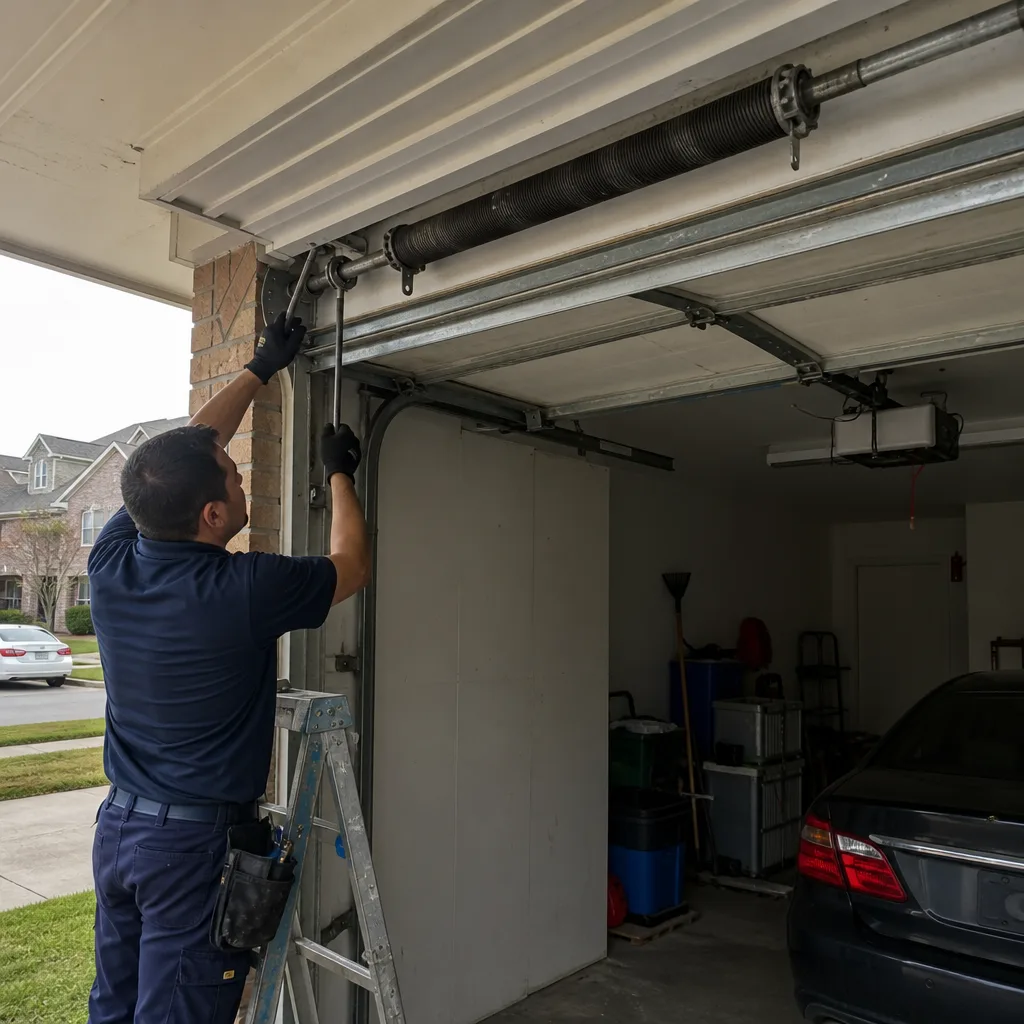 Before
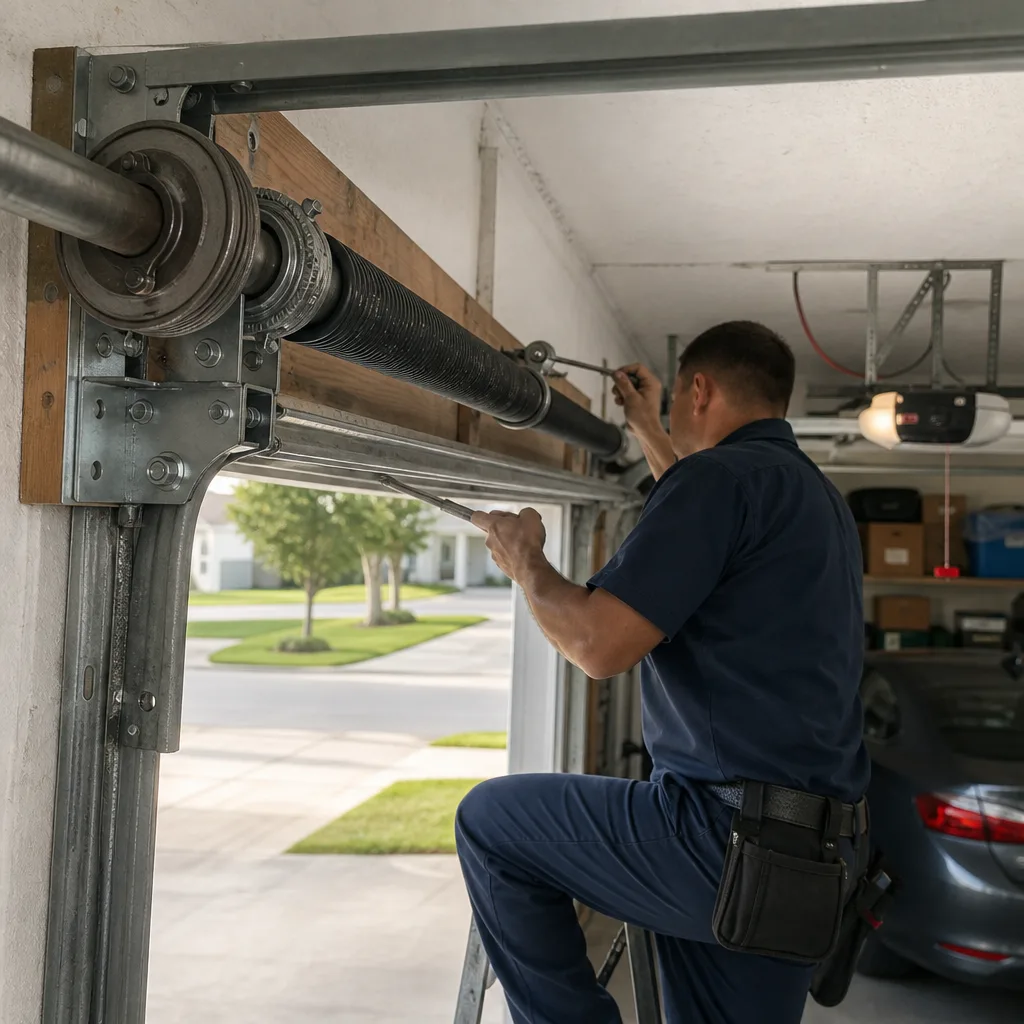 After
After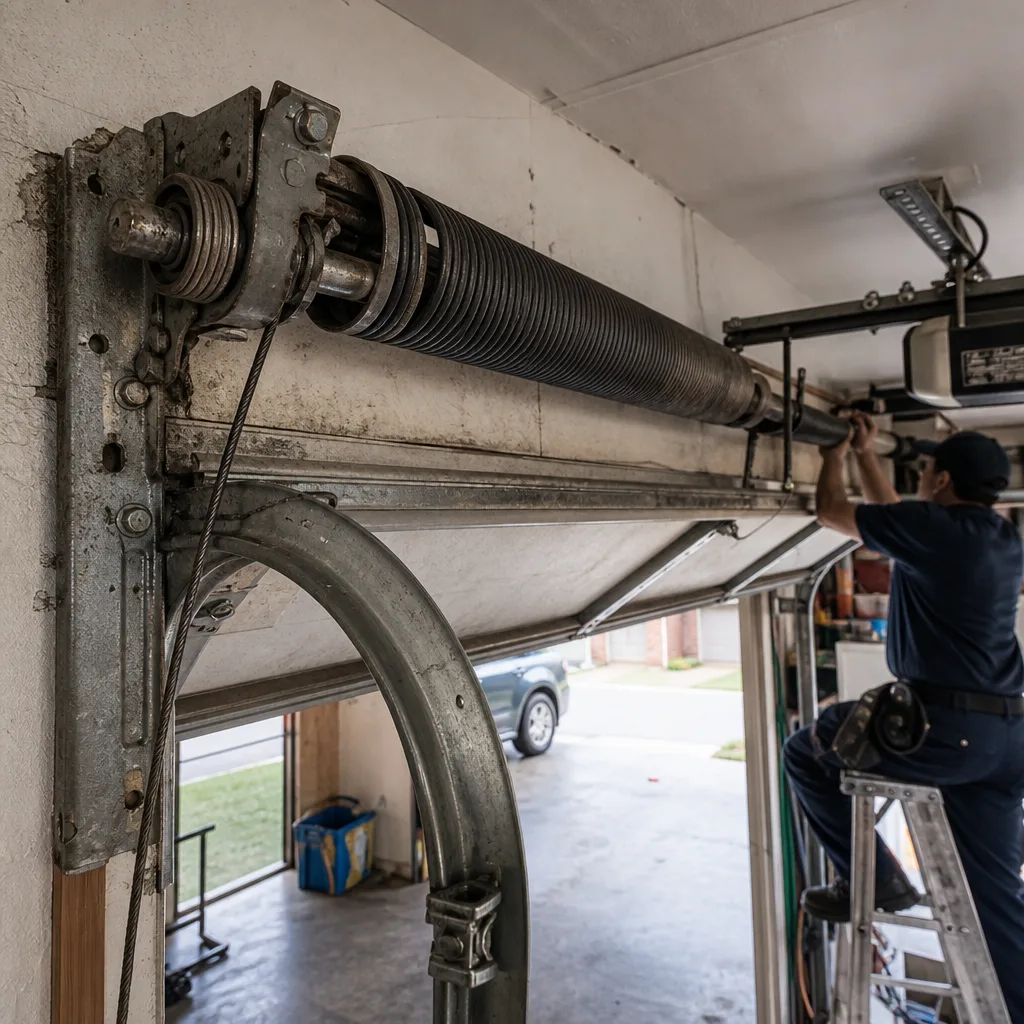 Before
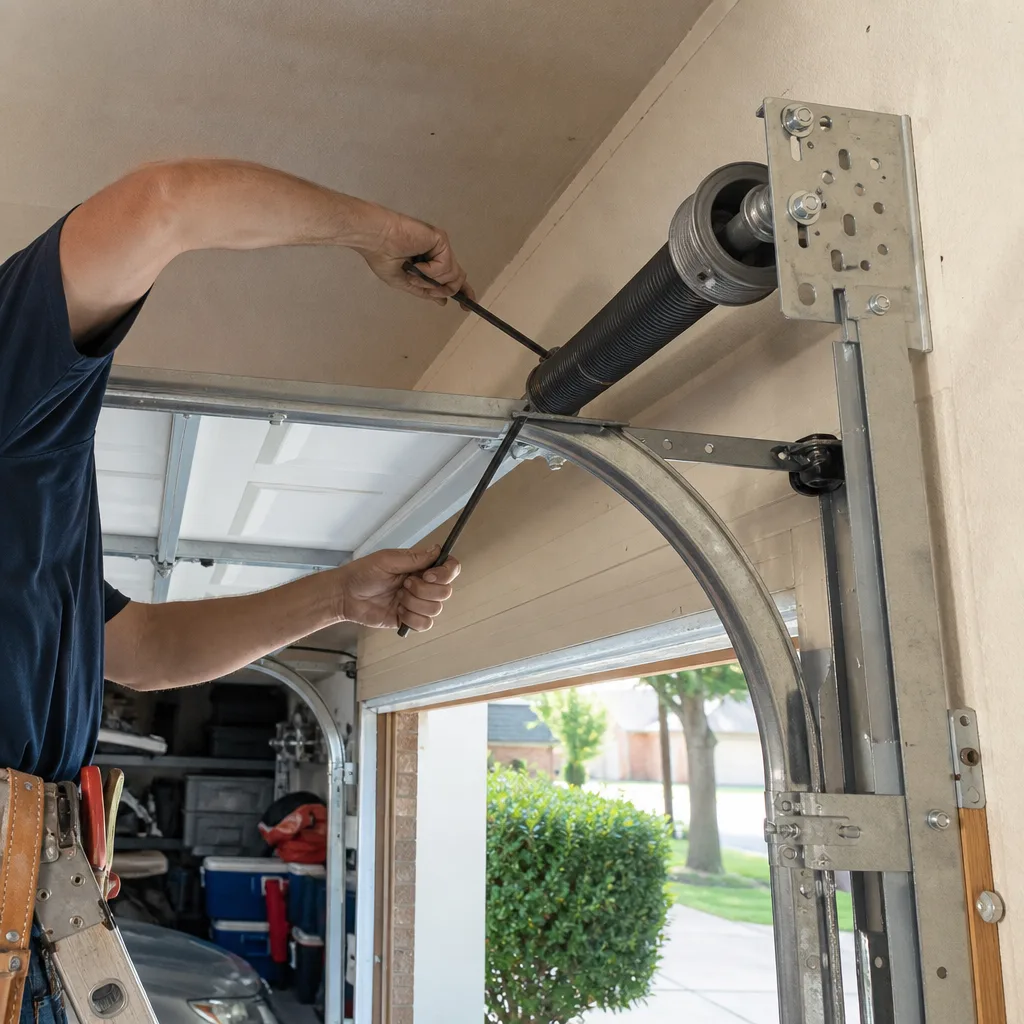 After
AfterSeasonal Garage Door Care for Richmond: Year-Round Homeowner’s Guide
Richmond’s “winter” lasts roughly eight weeks, but the temperature swings inside that window are wide enough to contract torsion springs and change cable tension overnight. That brief cold stretch causes more spring breaks here than the rest of the year combined. Most Richmond homeowners we meet treat garage door maintenance like a northern calendar: winterize in November, tune up in April. That approach misses what actually happens to doors in Fort Bend County. This guide - and our Complete Guide to Garage Door in Richmond - maps care tasks to Richmond’s real seasons - humid cool stretches, brutal summers, brief shoulder windows, and storm prep periods - so you stay ahead of the failure modes that show up at your address, not someone else’s in Minnesota.
Quick Answer
Garage door care in Richmond, Texas follows four local weather patterns rather than traditional seasons: a brief January-February cold window when rapid temperature swings stress springs and cables; a March-May humid shoulder season for preventive maintenance; a June-September heat period that damages openers and misaligns photo-eyes; and an October-December storm-prep window for load-testing hardware and documenting condition for insurers. The $89 seasonal tune-up from Mainspring Garage Door Co. home covers all critical points, and most Richmond homeowners who stay on this schedule avoid emergency calls entirely.
Table of Contents
- Why Richmond’s Brief Cold Window Breaks More Springs Than Winter
- The March-May Shoulder Season: Your One Clean Maintenance Window
- Summer Heat: Openers, Photo-Eyes, and Door Surface Temperature
- Hurricane Season Prep: Load-Testing and Documentation
- The Hidden Season: How Richmond’s Clay Soil Shifts Your Door Gap
- A Richmond Homeowner’s Year-Round Inspection Checklist
- Common Mistakes to Avoid
- When to Call a Professional
- Frequently Asked Questions
Why Richmond’s Brief Cold Window Breaks More Springs Than Winter
January and February in Richmond do not bring sustained cold. They bring 30-degree temperature swings in 48 hours - 72°F on Tuesday, 38°F by Thursday morning. That pattern is harder on garage door hardware than a steady freeze.
Torsion springs are made of high-carbon steel that expands and contracts with temperature. In a climate with gradual seasonal change, the metal adjusts evenly. In Richmond’s winter, a spring that was properly tensioned on Monday can be over-tensioned by Wednesday morning as the metal contracts faster than the mounting hardware settles. The result: fatigue cracks that propagate to full failure, often at 6:00 a.m. when the door is first cycled.
Cables are equally vulnerable. The cable drums on either side of the torsion tube are aluminum. Steel cable contracts in cold; aluminum drum diameter changes at a different rate. The mismatch alters wrap geometry, and cables begin to fray where they seat in the drum grooves. We’ve replaced more cable sets in Richmond during the last two weeks of January than in July, August, and September combined.
What to do in this window:
- Listen for new noises. A single loud pop from the spring tube, or a rhythmic thump as the door rises, means the spring is developing flat spots. Do not wait for the break.
- Check cable tension visually. With the door closed, the cables should be taut but not piano-wire tight. If one side has visible slack while the other does not, the system is unbalanced.
- Cycle the door manually once per week during cold snaps. Disconnect the opener, lift the door halfway, and release. A properly balanced door stays in place. If it drifts up or down, the spring tension has shifted.
We do not recommend DIY spring adjustment. The torsion assembly stores enough energy to cause serious injury or death. A broken spring is obvious; a fatigued spring is not, and that is when most accidents happen. Our Garage Door Repair in Richmond service includes same-day spring replacement with the correct wire size and cycle rating for your door’s weight. We carry Clopay, Amarr, and Wayne Dalton compatible springs on every truck, so most jobs finish in one visit.
The 90-Day Done Right Promise applies to every spring job: if the door does not balance correctly after installation, we return at no charge. No paperwork, no dispute. That promise is in writing on every invoice.
The March-May Shoulder Season: Your One Clean Maintenance Window
Mid-March through early May is the only period in Richmond when temperature, humidity, and storm probability all align for proper maintenance. Days run 60-75°F, nights stay above 50°F, and the Gulf moisture has not yet saturated the air. This is when lubrication stays where you put it, weatherstrip remains pliable during installation, and metal components are at their neutral dimension.
We schedule the majority of our $89 Seasonal Tune-Ups during this window, and for good reason. The work done in March lasts longer than the same work done in July, when 95°F heat causes lubricant to thin and run within days.
What a proper shoulder-season tune-up covers:
- Torsion spring tension verification with a calibrated winding bar and digital scale. We measure door weight at the midpoint of travel and compare to the spring’s rated lift.
- Roller inspection and replacement. Nylon rollers degrade from UV exposure even in a garage; steel rollers develop flat spots from impact. We stock both types for all major track profiles.
- Hinge bolt torque check. The 1,500+ cycles per year a typical Richmond door completes will loosen hardware. We torque to manufacturer spec and mark bolts with paint for visual confirmation at next service.
- Track alignment verification. The vertical-to-horizontal transition must be plumb within 1/4 inch over 10 feet. Richmond’s clay soil movement (covered later) makes this critical.
- Weatherstrip replacement. Bottom seal, jamb seal, and header seal. We use vinyl with integrated aluminum retainer for the bottom, EPDM rubber for jambs. The materials are specified for Gulf Coast UV exposure.
- Opener force and limit settings. Thermal expansion changes door resistance through the year; we set openers to the middle of their adjustment range so summer and winter extremes stay within tolerance.
- Safety reverse test with a 2×4 board and photo-eye alignment with a laser level.
Carl Dutton has overseen this protocol since 2016. The K.E.Y.S. values code - Krafted right, Every time, Your home first, Standing behind it - is printed on the checklist every technician carries. If any item is skipped, the job is not signed off.
This is also the optimal window for Garage Door Installation in Richmond. Caulk cures predictably, sealants reach full adhesion, and the door is conditioned to its operating environment from day one. We see fewer callback issues on doors installed in March and April than any other months.
Summer Heat: Openers, Photo-Eyes, and Door Surface Temperature
From June through September, Richmond garages become solar ovens. A south- or west-facing steel door can reach 140°F surface temperature by 3:00 p.m. That heat does not just make the garage uncomfortable. It creates three distinct failure modes that northern climate guides never mention.
Opener thermal shutdown. Garage door openers have internal thermal protectors that cut power when the motor housing exceeds approximately 180°F. In an unventilated Richmond garage with a dark door, that threshold is reached after three or four consecutive cycles on a July afternoon. The opener stops mid-travel, the homeowner presses the button again, and the thermal protector - now hotter - takes longer to reset. By the third attempt, the homeowner assumes the opener has failed.
What is actually happening: the motor is protecting itself. The fix is not replacement. It is reducing heat load and improving ventilation. We recommend solar attic fans for garages with south or west exposure, and lighter door colors when replacement is due. White or almond steel reflects enough radiation to drop surface temperature 40°F versus dark bronze or black.
Photo-eye misalignment from frame expansion. The photo-eye brackets mount to the vertical track or wall framing. In summer, the steel track expands laterally; wood framing swells with humidity. Either movement can shift one sensor 1/8 inch out of alignment - enough to break the beam and prevent door closure. The symptom is a door that opens normally but reverses immediately when the close button is pressed.
Richmond’s humidity compounds this. We see photo-eye issues peak in late July and August, when overnight temperatures stay above 80°F and relative humidity never drops below 70%. The sensors themselves are not failing. Their mounting geometry is changing.
What to check:
- Clean both lenses with a dry cloth. Spider webs and dust are the most common culprits, and they take thirty seconds to eliminate.
- Verify LED indicators. One sensor shows steady red or green; the other shows only when aligned. If either LED is dim or flickering, the beam is marginal.
- Check bracket tightness. A bracket that moves with hand pressure will move with thermal expansion. Tighten to snug, but do not over-torque and strip the lag.
- Test at 3:00 p.m. and again at 7:00 a.m. If the door fails only in afternoon heat, you have confirmed thermal expansion as the cause.
For persistent issues, our Garage Door Opener in Richmond service includes photo-eye relocation to more stable mounting points and upgrade to models with wider beam tolerance. We are factory-familiar with LiftMaster, Chamberlain, Genie, and Craftsman opener lines, and we carry replacement logic boards and drive gears on every truck.
Hurricane Season Prep: Load-Testing and Documentation
Hurricane season officially runs June through November, but Richmond’s peak risk window aligns with late-season Gulf development: September through early November. By October, homeowners who deferred prep are rushing to secure hardware before a named storm enters the forecast. That is the wrong sequence. Load-testing and documentation should be complete by September 30, not started on September 30.
Hurricane struts: what they actually do. A hurricane strut is a steel reinforcement that spans the interior face of the door, converting individual panel sections into a unified load-bearing surface. Without struts, wind pressure bows the center panel outward until the track rollers disengage. With properly installed struts, the door resists inward and outward pressure as a single plane.
Struts are not one-size-fits-all. A 9-foot-wide door in a 120-mph wind zone needs different reinforcement than a 16-foot door in the same zone. Richmond falls within varying wind speed contours depending on exact address; we verify requirements against the 2021 Texas Residential Code and local amendments.
What a proper annual load-test includes:
- Visual inspection of all strut-to-panel fasteners. We look for rust, backing-out screws, and deformation of the strut itself from previous wind events.
- Tap test with a non-marring mallet. A properly bonded strut produces a sharp, uniform ring. Delamination or hidden corrosion creates a dull thud.
- Deflection measurement. We apply 25 pounds of lateral pressure at mid-span and measure panel deflection with a dial indicator. Exceeding 1/4 inch indicates inadequate reinforcement for the door’s wind load rating.
- Track bracket and jamb bracket torque verification. The strut is only as strong as what it anchors to.
- Documentation: dated photographs, test readings, and a written condition assessment. This is what your insurer wants if a claim follows storm damage.
We provide this documentation on letterhead with technician signature and license verification. Many Richmond homeowners have used our reports to expedite claims after Hurricane Nicholas (2021) and Tropical Storm Imelda (2019). The 90-Day Done Right Promise extends to strut work: if a fastener loosens or a weld cracks, we return.
Do not wait for a hurricane watch to test your door. When the watch is issued, every garage door company from Houston to Victoria is booked solid. We answer our phones 24/7, but we cannot manufacture appointment slots that do not exist.
The Hidden Season: How Richmond’s Clay Soil Shifts Your Door Gap
This is the problem that looks like a weatherstrip issue, gets treated as a weatherstrip issue, and returns six months later because the root cause was never addressed.
Richmond sits on the Beaumont Formation, a expansive clay that swells when wet and shrinks when dry. A typical summer drought cycle - common in Fort Bend County from July through September - can drop the soil moisture content 30% or more. The ground beneath your garage slab contracts, the slab tilts slightly, and the door’s bottom gap changes from consistent to tapered: tight at one corner, gapping at the other.
Homeowners see the gap and replace the bottom seal. The new seal compresses fully at the tight corner and barely contacts at the gapped corner. Water, dust, and insects enter. The homeowner blames the seal quality and replaces it again. The real problem is foundation movement, and no seal can compensate for a 3/8-inch differential.
How to distinguish soil shift from seal wear:
- Soil shift creates a tapered gap that changes with season. Seal wear creates a uniform gap that worsens gradually over years.
- Measure the gap at left, center, and right with the door closed. A 1/4-inch or greater difference between points indicates slab movement.
- Check exterior grade. If the driveway or apron has separated from the slab edge, or if you can insert a knife blade into the joint, the slab has moved independently of surrounding soil.
- Review timing. Did the gap appear suddenly in August after a dry July? That is soil shrinkage, not seal degradation.
We do not perform foundation repair. We do document door-to-slab geometry so you have baseline measurements if a foundation contractor becomes necessary. In many cases, we can adjust the door’s vertical track slightly to restore even contact without structural intervention. This is precision work: too much adjustment and the door binds; too little and the gap remains. Our technicians are trained to this under Carl Dutton’s direct supervision.
The permanent solution often involves improving drainage around the garage perimeter and maintaining consistent soil moisture. We have seen homeowners in the Lakes of Bella Terra and Long Meadow Farms subdivisions solve recurring gap issues simply by extending downspouts and adding soaker hoses to perimeter beds during drought periods.
A Richmond Homeowner’s Year-Round Inspection Checklist
Use this checklist monthly. It takes ten minutes and catches most problems before they become emergency calls.
Monthly (all year):
- Visual spring inspection. Look for gaps in the coil, rust streaks, or a 3-inch section where the coils no longer touch when the door is closed. Any of these means the spring is cycling on borrowed time.
- Cable fray check. Run a cotton glove along each cable. Snags indicate broken strands. Even one broken strand near a drum or bottom bracket is a replace-now condition.
- Roller operation. The door should rise and lower without lateral wobble or grinding. Nylon rollers should be quiet; steel rollers will have slight bearing noise but no squeal.
- Auto-reverse test. Place a 2×4 flat on the floor centered under the door. The door must reverse on contact. If it does not, the force setting is excessive.
- Photo-eye beam test. Pass a broom handle through the beam during closing. The door must reverse within 2 seconds.
Seasonal additions:
- January-February: Manual balance test weekly during cold snaps. Listen for new pops or clicks from the spring tube.
- March-May: Full professional tune-up. Replace weatherstrip. Verify track plumb and level. Document door weight and spring specs.
- June-September: Check opener thermal performance. Verify photo-eye alignment at peak afternoon heat. Monitor bottom seal gap for soil movement.
- October-December: Hurricane strut inspection and load test. Update insurance documentation. Verify emergency release rope is accessible and not frayed.
Our $89 Seasonal Tune-Up covers all monthly and seasonal items in a single visit. The price is stated before work begins. There are no surprises on the bill.
Common Mistakes to Avoid
- Spraying WD-40 on the track. WD-40 is a solvent, not a lubricant. It strips existing grease, attracts dust, and turns track surfaces into abrasive paste. Use lithium-based garage door lubricant on rollers, hinges, and bearings; silicone spray on weatherstrip only.
- Ignoring a slow door. A door that takes 15 seconds to open instead of 10 is not “getting old.” The opener is compensating for increased mechanical resistance, usually from a failing spring or binding roller. The opener will fail next, and that repair costs more than the spring would have.
- Adjusting the opener force setting instead of fixing the mechanical problem. This masks symptoms until the opener burns out or the door becomes a safety hazard. We see this constantly in Richmond’s Pecan Grove and Aliana neighborhoods, where homeowners try to “tune out” a grinding noise.
- Waiting for the spring to break completely. A broken spring is obvious and immobilizes the door. A fatigued spring is dangerous because it still functions but with unpredictable force distribution. The door can slam closed or jerk open without warning.
- Buying replacement springs by door size alone. Spring selection requires door weight, drum diameter, track radius, and desired cycle life. A spring that fits but is under-rated for your door’s actual weight will fail in months, not years. We measure on-site and match to manufacturer specifications.
- Skipping hurricane strut inspection because “we didn’t get hit last year.” Struts fatigue from thermal cycling and vibration even without wind loading. The 2021 freeze-thaw cycle alone damaged more strut welds in Richmond than Hurricane Nicholas did.
- Assuming all garage door companies stock parts for all brands. Many operators carry only the most common sizes and must order for Clopay, Amarr, or Wayne Dalton specific hardware. Our trucks carry springs, cables, rollers, and opener components for all major brands. Most jobs finish in one visit.
When to Call a Professional
Call when you hear a new noise, see a new gap, or smell electrical overheating. Call before the emergency, not after. Specifically: broken springs, frayed cables, doors off-track, openers that hum without moving, and any door that does not reverse on contact with an obstruction. These are not DIY projects. The torsion assembly stores lethal energy; off-track doors can fall without warning; electrical faults in garage environments risk fire.
Mainspring Garage Door Co. offers free estimates in Richmond. A live person answers every call, including nights, weekends, and holidays. Most repairs are completed in a single visit because our technicians arrive with the necessary parts already on the truck. The flat price is stated before any work begins. Call (936) 278-3457 to schedule.
Frequently Asked Questions
Our seasonal tune-up is $89 and covers spring tension verification, roller and hinge inspection, track alignment, weatherstrip condition, opener force settings, and safety system testing. Repairs found during tune-up are quoted separately with upfront pricing before any additional work begins. Call (936) 278-3457 to schedule - estimates are free.
Once yearly, ideally in the March-May shoulder season when temperature and humidity allow lubricants to set properly and metal components are at neutral dimension. Homes with doors facing direct afternoon sun, or with south- or west-facing garages, benefit from a mid-summer inspection of opener thermal performance and photo-eye alignment.
Rapid temperature swings cause more damage than sustained cold. A 30-degree drop in 48 hours contracts steel springs faster than aluminum drums and mounting hardware adjust. The resulting stress concentration creates fatigue cracks that propagate to failure. January and February in Richmond see more spring breaks than the other ten months combined.
Homeowners can apply lubricant to accessible hinges and rollers monthly. However, torsion spring lubrication, track alignment verification, and opener force adjustment require training and proper tools. Improper lubricant selection - especially WD-40 on tracks - causes more problems than it solves. The $89 professional tune-up includes proper products and application.
Adequate struts are properly fastened, show no rust or deformation, and limit mid-span deflection to 1/4 inch under 25 pounds of lateral pressure. The only way to verify this is load-testing with measurement tools. We provide dated documentation with photographs for insurance purposes. If your door was installed before 2005, it likely predates current wind load requirements and should be evaluated.
No. Mainspring states the flat price before any work begins. If additional issues are found during repair, we stop, explain, and quote separately. You approve every dollar before it is spent. There are no surprises on the bill. This is how we have operated since 1984.
Yes. We stock springs, cables, rollers, hinges, weatherstrip, and opener components for all major brands including Clopay, Amarr, Wayne Dalton, LiftMaster, Chamberlain, Genie, and Craftsman. Most repairs are completed in a single visit. If a specialty part is required, we order it and return at no additional trip charge.
If any completed work is not right, Mainspring returns at no charge to make it right. No paperwork to file, no dispute process, no expiration date within the 90-day window. The promise is printed on every invoice. We have honored it since 1984, and we still answer the phone.
The Bottom Line
Richmond’s garage doors face four distinct stress periods: rapid winter temperature swings that fatigue springs, summer heat that overwhelms openers and misaligns sensors, hurricane winds that test structural reinforcement, and clay soil movement that changes door geometry beneath the weatherstrip. A maintenance calendar borrowed from Minnesota misses all of them. The homeowners who stay ahead of these patterns - with a March-May tune-up, mid-summer thermal checks, and fall load-testing - rarely make emergency calls. Those who wait for the break, the burnout, or the storm watch pay more and wait longer. Mainspring Garage Door Co. has served Richmond since 2016 with upfront pricing, stocked trucks, and a 90-Day Done Right Promise in writing on every job, with more guides & resources available on our blog. The $89 Seasonal Tune-Up is the simplest way to stay on schedule. Call (936) 278-3457 for a free estimate.
Written by Carl Dutton, Owner at Mainspring Garage Door Co., serving Richmond since 2016.