
Full 25-point door and opener safety check with every visit - springs, cables, rollers, tracks, and your LiftMaster or Chamberlain opener included
You get a price before we start. It does not change when the truck arrives.
 Before
 After
After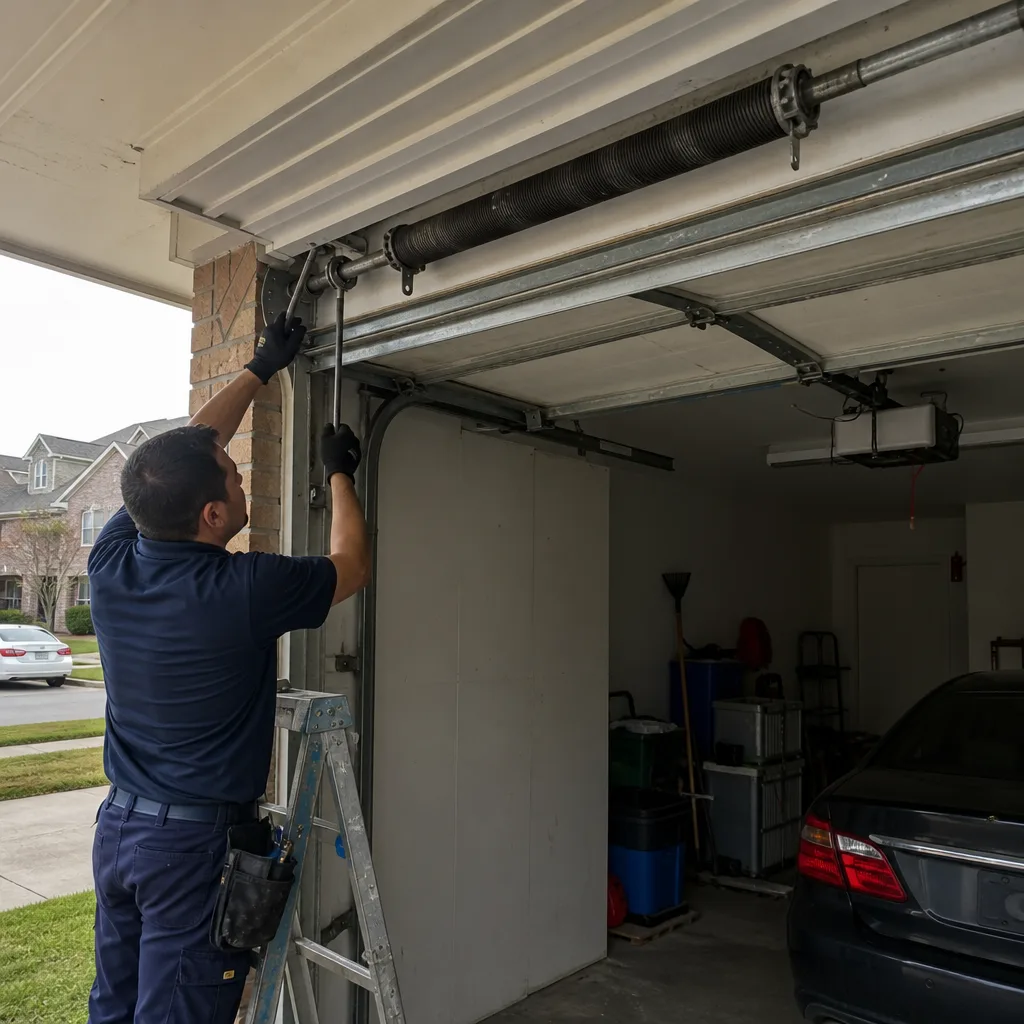 Before
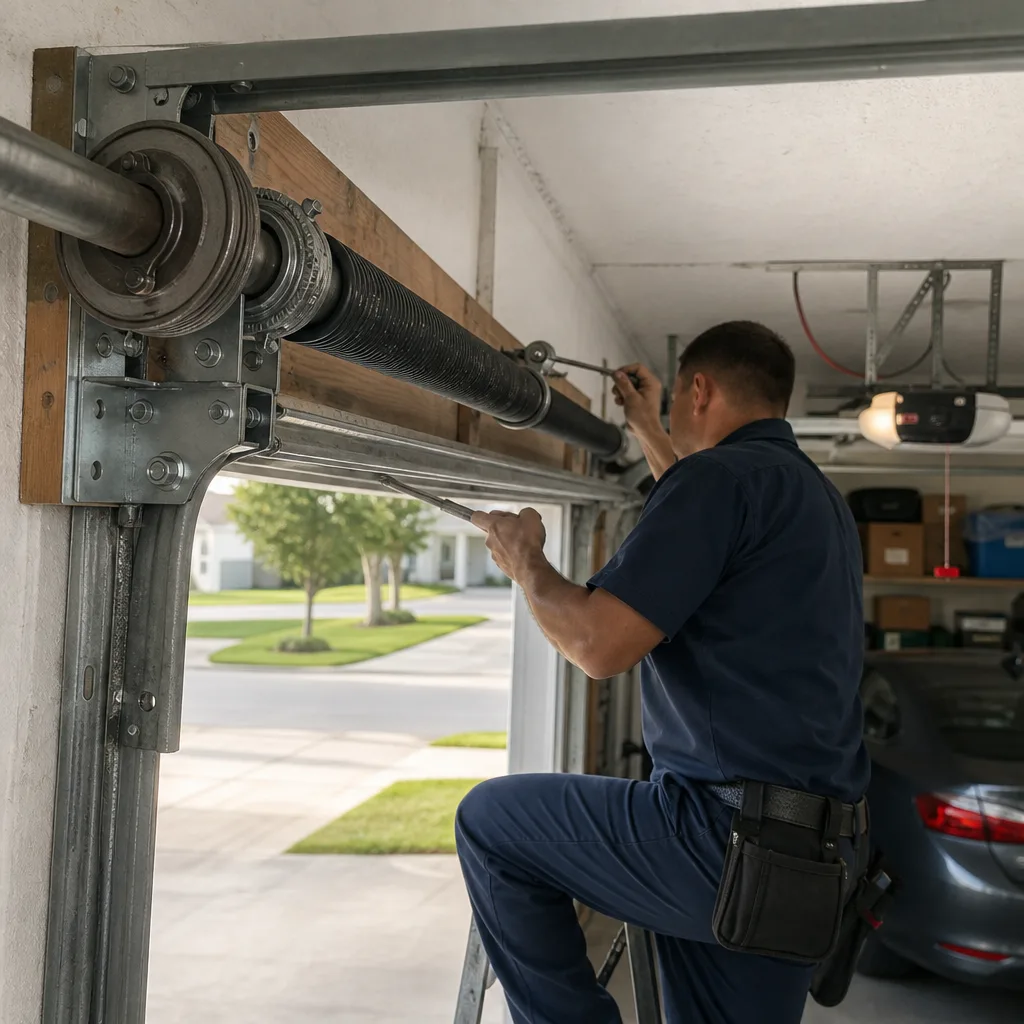 After
After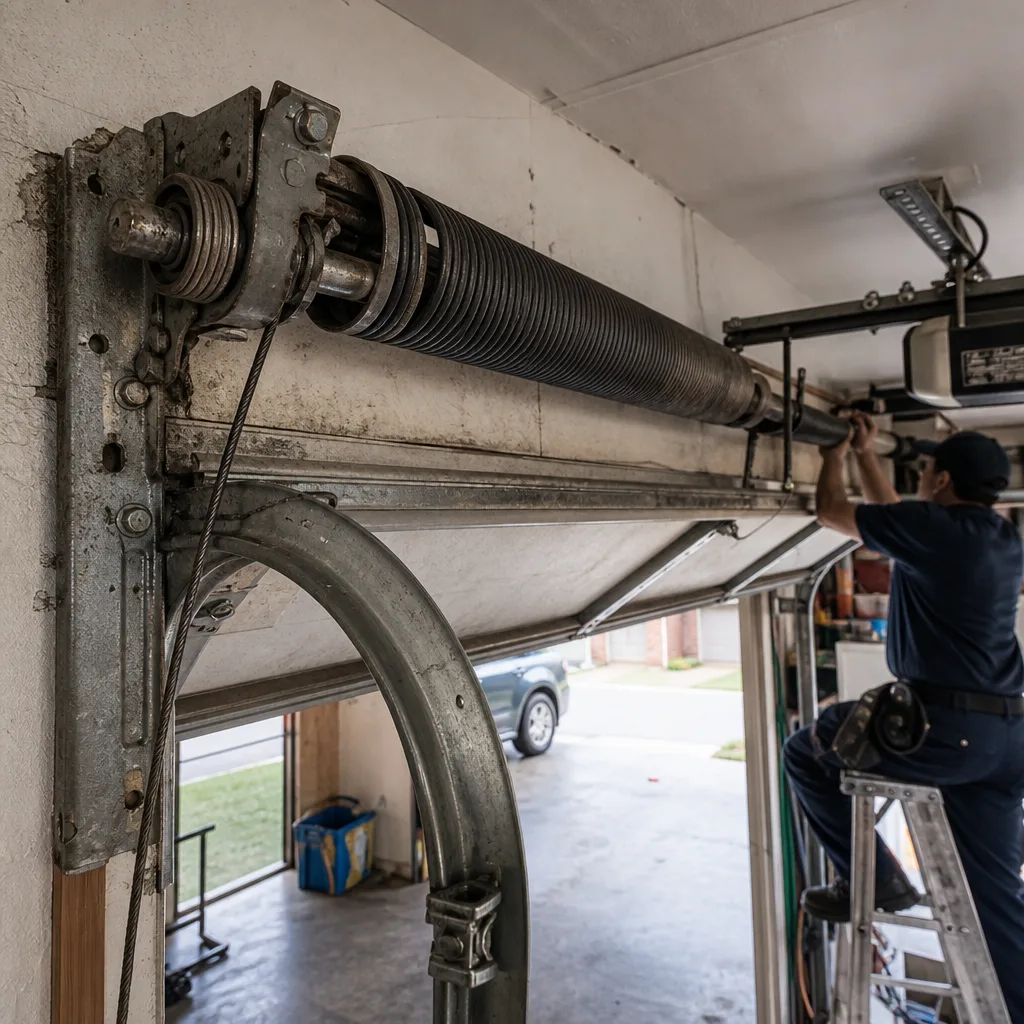 Before
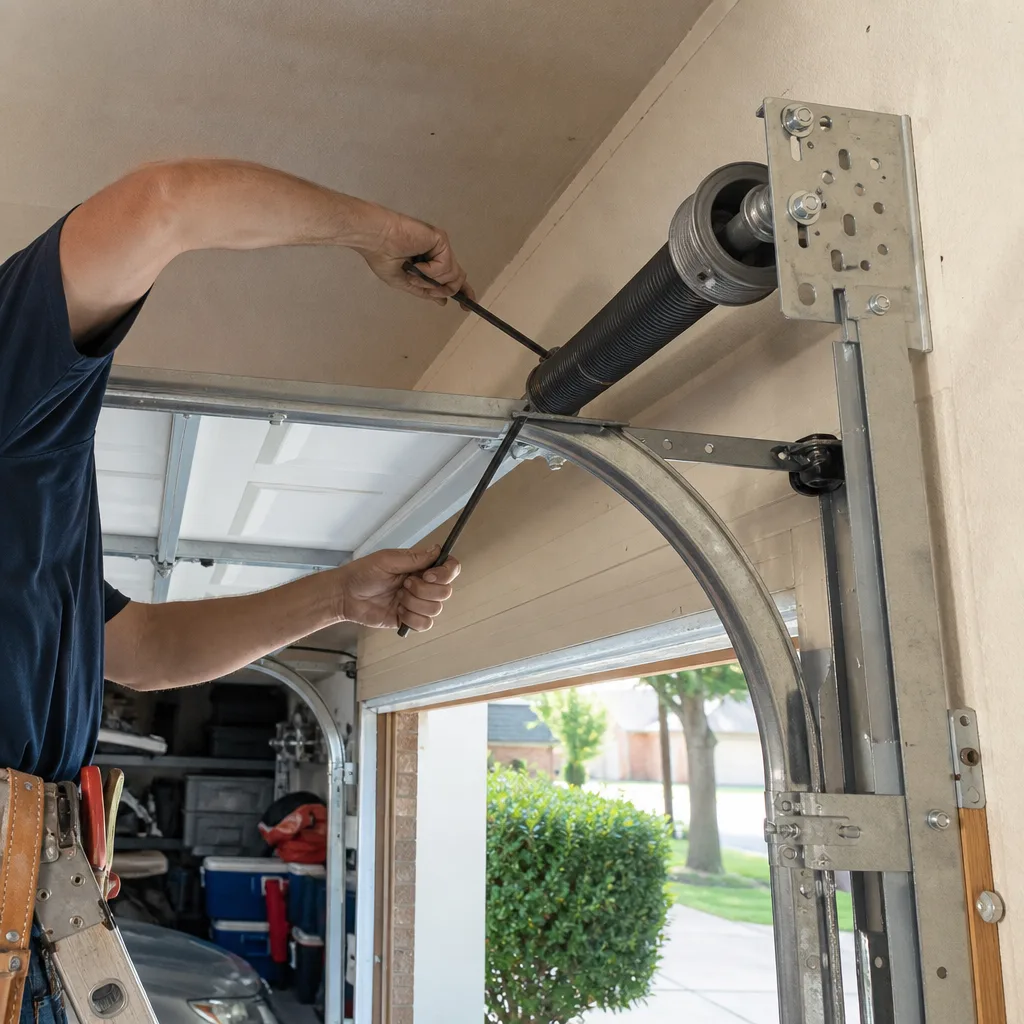 After
AfterWayne Dalton Weather Seal Replacement: The Richmond Owner’s Guide
Wayne Dalton weather seal replacement in Richmond typically runs $150-$600 installed, depending on door width and whether the retainer track also needs work. We stock the common Wayne Dalton profiles on our trucks, and most replacements are finished in a single visit. You’ll usually notice the problem first as water pooling after a hard rain, or a draft you can feel at ankle level when the door is closed.
The bottom weather seal on a Wayne Dalton door does more than keep out dust. In Richmond’s clay-heavy soil and shifting slab conditions, a compromised seal lets humidity creep into the garage, which accelerates rust on torsion springs and opener hardware. We’ve replaced seals in Pecan Grove homes where the original vinyl had hardened to plastic after eight summers of Texas heat, and in Long Meadow Farms where rodents had chewed through the bulb profile. The fix is straightforward when you match the right part to the right retainer.
Which Wayne Dalton Models This Applies To
Wayne Dalton has used three main bottom seal systems across their residential lines, and mixing them up means a second trip. The 9000, 9100, and 9600 series steel doors typically use a T-style bulb seal that slides into a single-channel retainer. The 8000 and 8100 series, along with many ThermaMark and Classic Steel models, use a U-shaped double-T retainer that accepts a bulb with two insertion legs. The 300 series wood doors and some vintage fiberglass models used an older J-type seal, which is harder to source and often requires retrofitting a new retainer entirely.
The part number you need is usually stamped on the door’s inner panel, near the top right corner. If that’s worn off, measure the retainer channel width: 1-3/4 inches indicates the newer T-style system, while 2 inches points to the double-T. We carry both OEM Wayne Dalton seals and a quality aftermarket equivalent made by Clopay that fits the same retainer and carries the same durometer rating. The aftermarket option saves roughly $40 on the parts line and performs identically in Richmond’s heat cycles. We are an independent service provider, not affiliated with Wayne Dalton, so we have no incentive to push OEM over what works.
One compatibility gotcha: the 9100 series manufactured between 2002 and 2007 used a transitional retainer that looks like the T-style but has slightly narrower channel walls. A standard T-seal will slide in but won’t grip, and it’ll fall out within a month. We check this with a feeler gauge on every 9100 call.
Signs Your Wayne Dalton Weather Seal Replacement Is Failing
- Visible cracking or splitting along the bulb. The vinyl compound hardens with UV exposure, and Richmond’s 100-degree July days cook the seal against hot concrete. Once the surface crazes, the seal loses its compression memory and can’t rebound to fill gaps.
- Water intrusion after rain, especially at the door corners. This usually means the seal has shrunk or the retainer has pulled away from the door bottom. In Richmond’s gumbo clay, that water tracks inward and stains the slab.
- Light visible under the closed door. A proper seal should compress to zero light passage. If you can slide a business card through, outside air and insects are already coming with it.
- The seal drags or bunches when the door operates. This happens when the vinyl has deformed or the retainer track is bent. The opener works harder, and the strain shows up eventually in gear wear.
- Musty odor or rust on stored items. A failed seal lets in humidity that doesn’t ventilate. We’ve found this in Richmond garages where the owner assumed the AC duct was leaking, and it was just the door seal gone hard.
Replacement Cost & What’s Included
Wayne Dalton weather seal replacement falls within our standard garage door repair range of $150-$600 for Richmond. Most single-car steel doors with a straightforward T-style seal run toward the lower end, around $180-$280. Double-wide doors, wood series requiring retainer retrofit, or jobs where the old seal has fused to the track and needs careful extraction run higher.
The quote we give before any work starts breaks down parts and labor separately. The seal itself, OEM or aftermarket, plus the retainer if it’s corroded or bent. Labor includes removal, track cleaning, installation, and testing the door’s bottom seal contact across its full width. We quote flat. The price does not change once we’re looking at it. Every seal replacement carries our 90-Day Done Right Promise in writing: if it leaks, if it drags, if anything isn’t right, we come back at no charge.
| Component | Typical Range (Richmond) |
|---|---|
| T-style bulb seal, single car | $180-$280 |
| T-style bulb seal, double car | $220-$360 |
| Double-T seal with retainer cleaning | $260-$420 |
| J-type retrofit to modern retainer | $380-$600 |
DIY or Call Us?
A homeowner can safely inspect their own seal. Close the door, kneel down, and run a hand along the bulb. If it’s hard, cracked, or no longer springy, it’s done. Check the retainer screws: if they’re loose, tightening them may buy time. But removing and replacing the seal itself involves working with the door in the down position, which puts your hands near the bottom brackets where the lift cables attach. Those cables are under constant tension from the torsion springs. A slip with a screwdriver or a sharp edge on corroded hardware can release that tension without warning.
We don’t recommend DIY replacement on any door with a torsion spring system, which covers most Wayne Dalton steel doors installed after 1990. The seal swap itself isn’t complex, but the proximity to high-tension hardware makes it a job for someone trained to lock the door and handle the brackets safely. Our technicians carry the right seal profile, the right retainer if needed, and the tools to do it without putting a homeowner at risk. Quote first. Work second. No surprises either way. Call (936) 278-3457 and we’ll sort out which profile you have.
FAQs
In Richmond’s climate, a quality vinyl seal lasts 5 to 8 years with direct sun exposure, or up to 10 years if the door faces north or is under a deep overhang. The 100-degree days and UV index here are harder on rubber compounds than cooler coastal climates. When we replace a seal in the Pecan Grove or Aliana areas, we typically see the previous one was original to a 2008-2012 installation. Call (936) 278-3457 if you’re unsure whether yours is due.
No. Once the vinyl has hardened or torn, there is no adhesive or patch that restores its flexibility and compression seal. We’ve seen homeowners try silicone caulk or rubber tape; it lasts one season at best and usually makes the eventual replacement more expensive because of cleanup. Replacement is the only reliable fix.
Most Wayne Dalton seal replacements take 45 minutes to 90 minutes, depending on whether the retainer track needs cleaning or replacement. We finish the majority in a single visit because we stock the common profiles on every truck. You won’t be waiting on a parts order.
Yes. We stock T-style and double-T bulb seals in standard widths, plus replacement retainers for the common corrosion and impact damage we see in Richmond. For the older J-type or specialty widths, we can source within 24 hours, though that’s rare. We also carry seals for LiftMaster, Chamberlain, and Genie opener systems when the job involves more than just the door seal.
Written by Carl Dutton, Owner, Mainspring Garage Door Co. at Mainspring Garage Door Co., serving Richmond and nearby areas.