
Last updated September 10, 2026
Full 25-point door and opener safety check with every visit - springs, cables, rollers, tracks, and your LiftMaster or Chamberlain opener included
You get a price before we start. It does not change when the truck arrives.
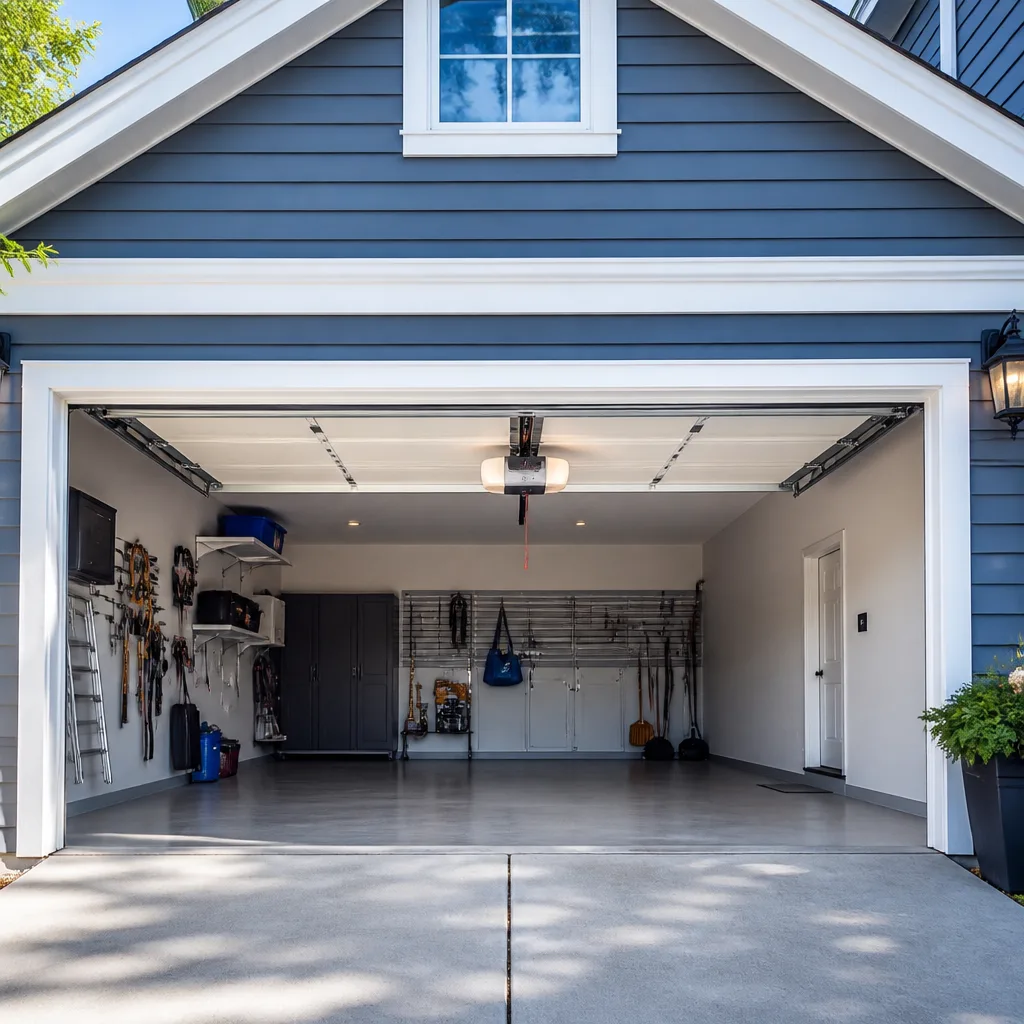
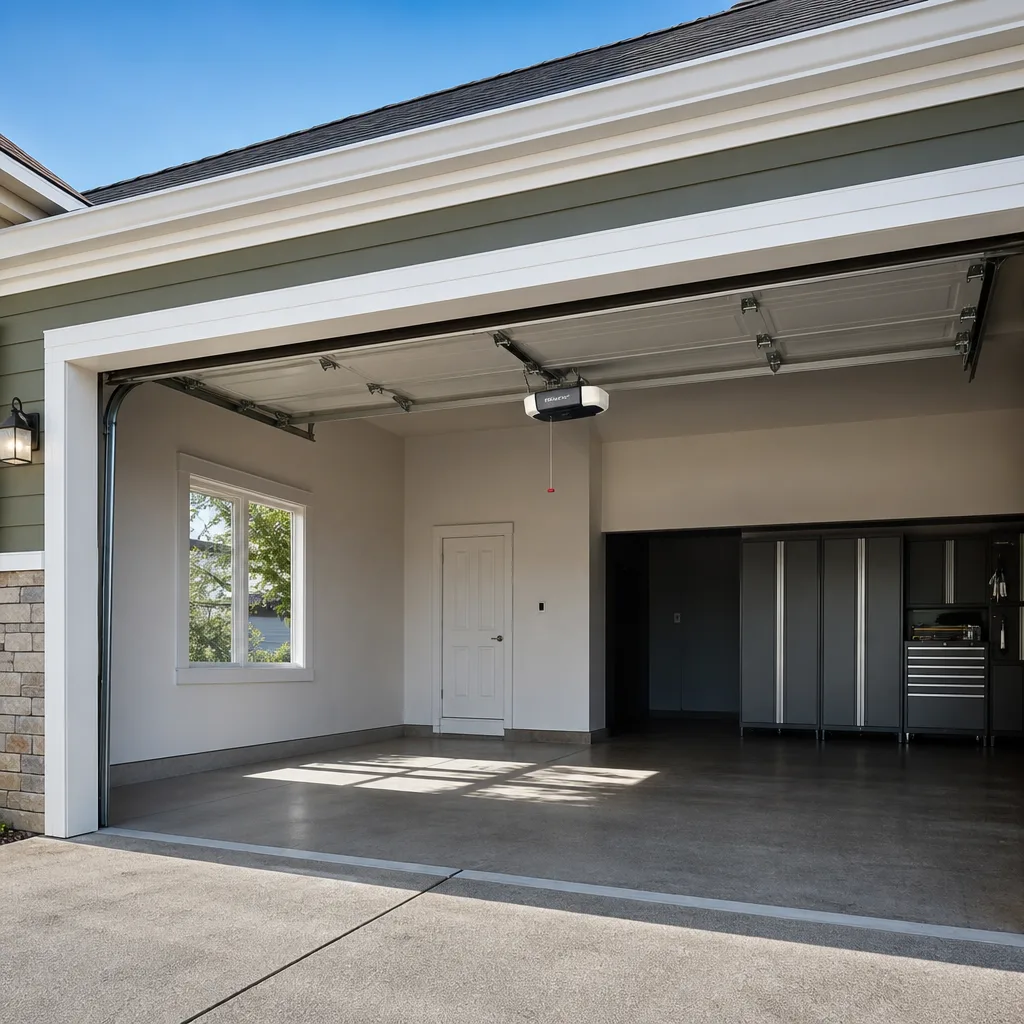
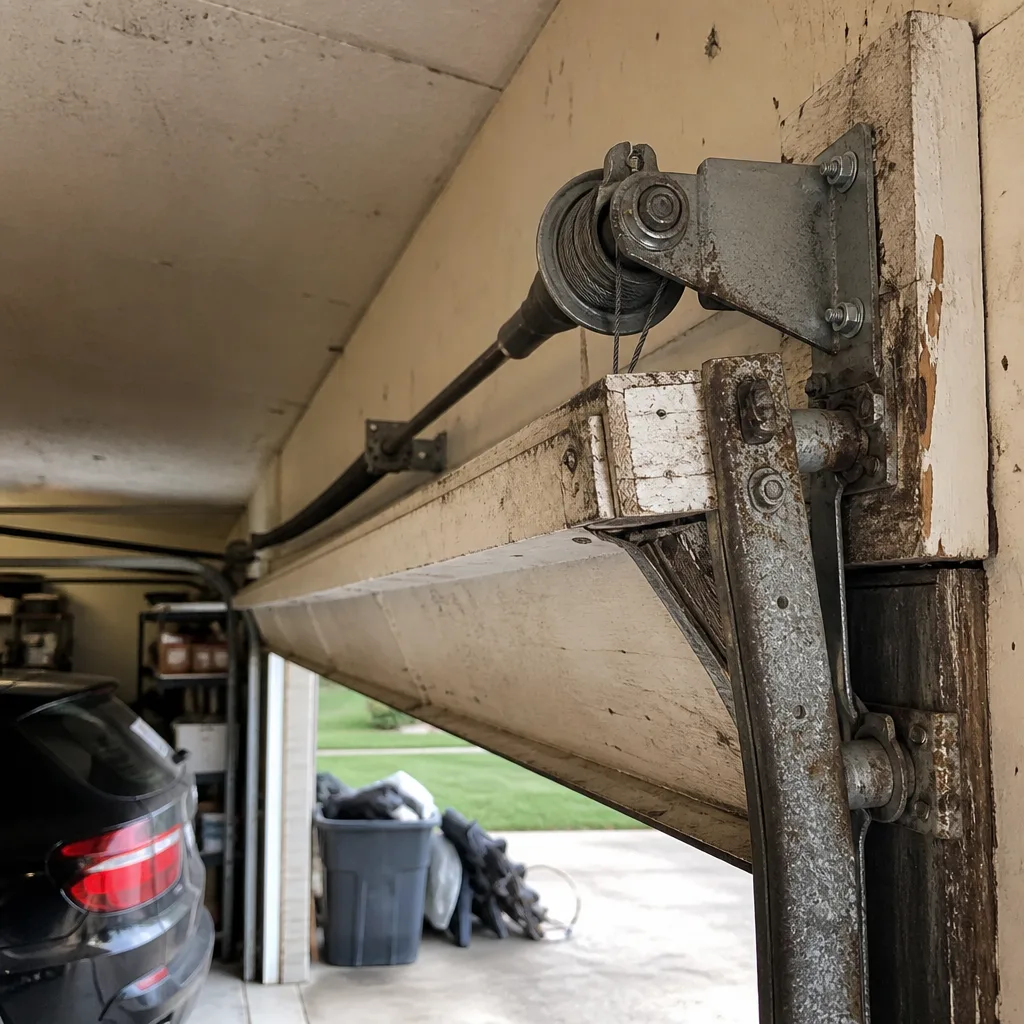 Before
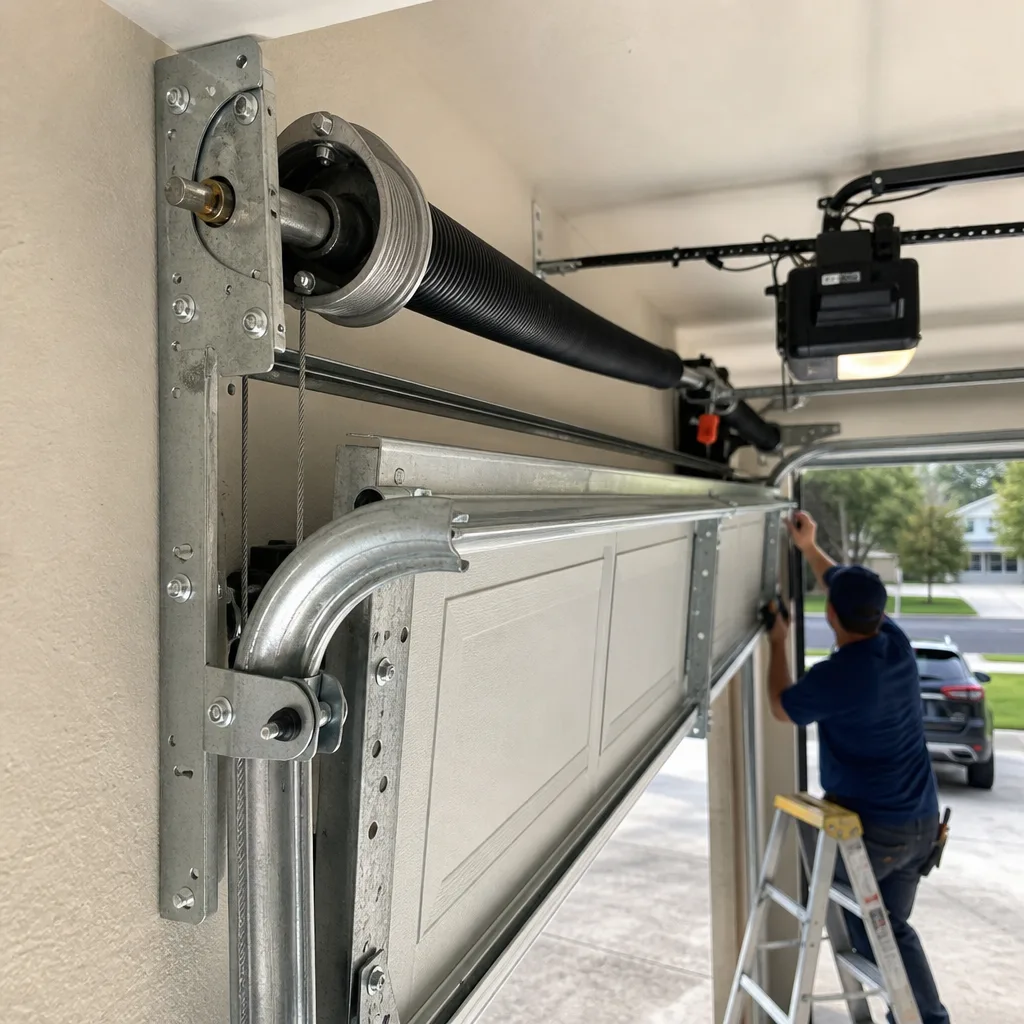 After
After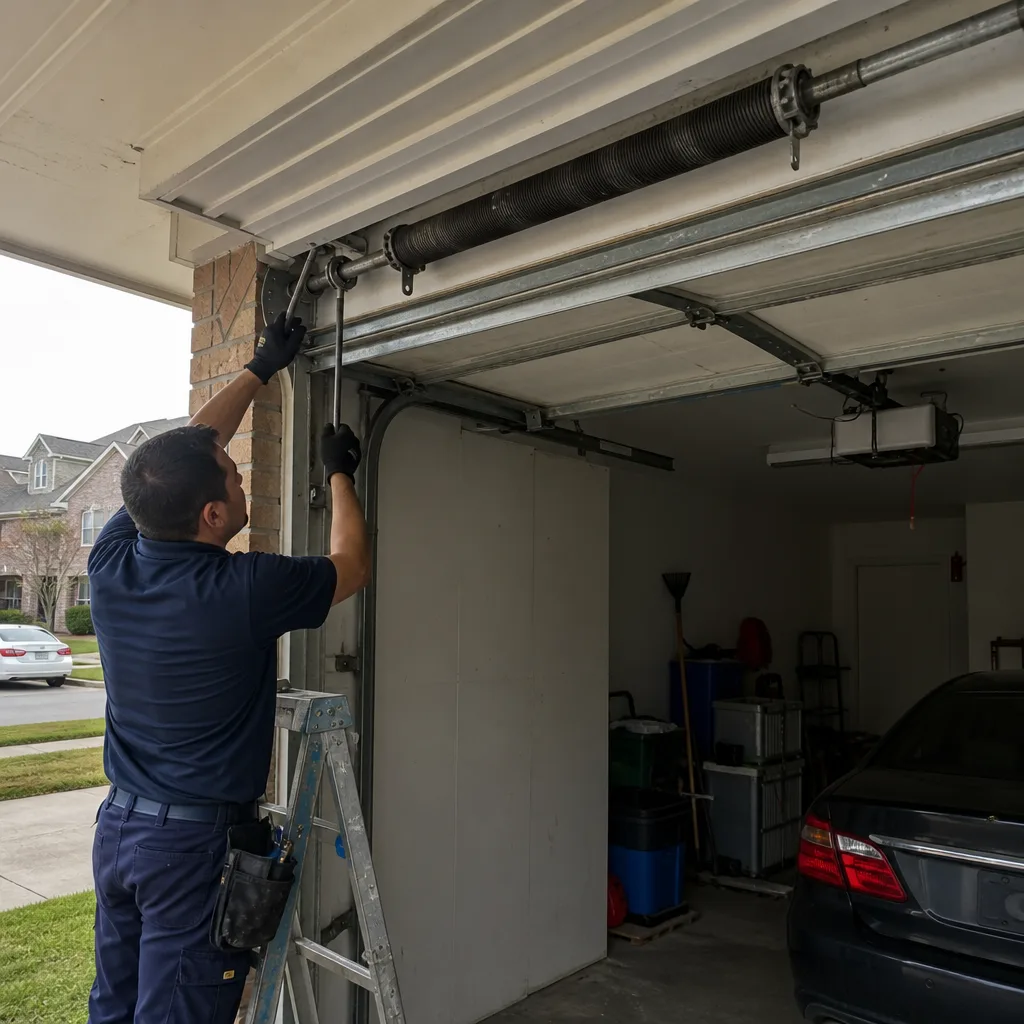 Before
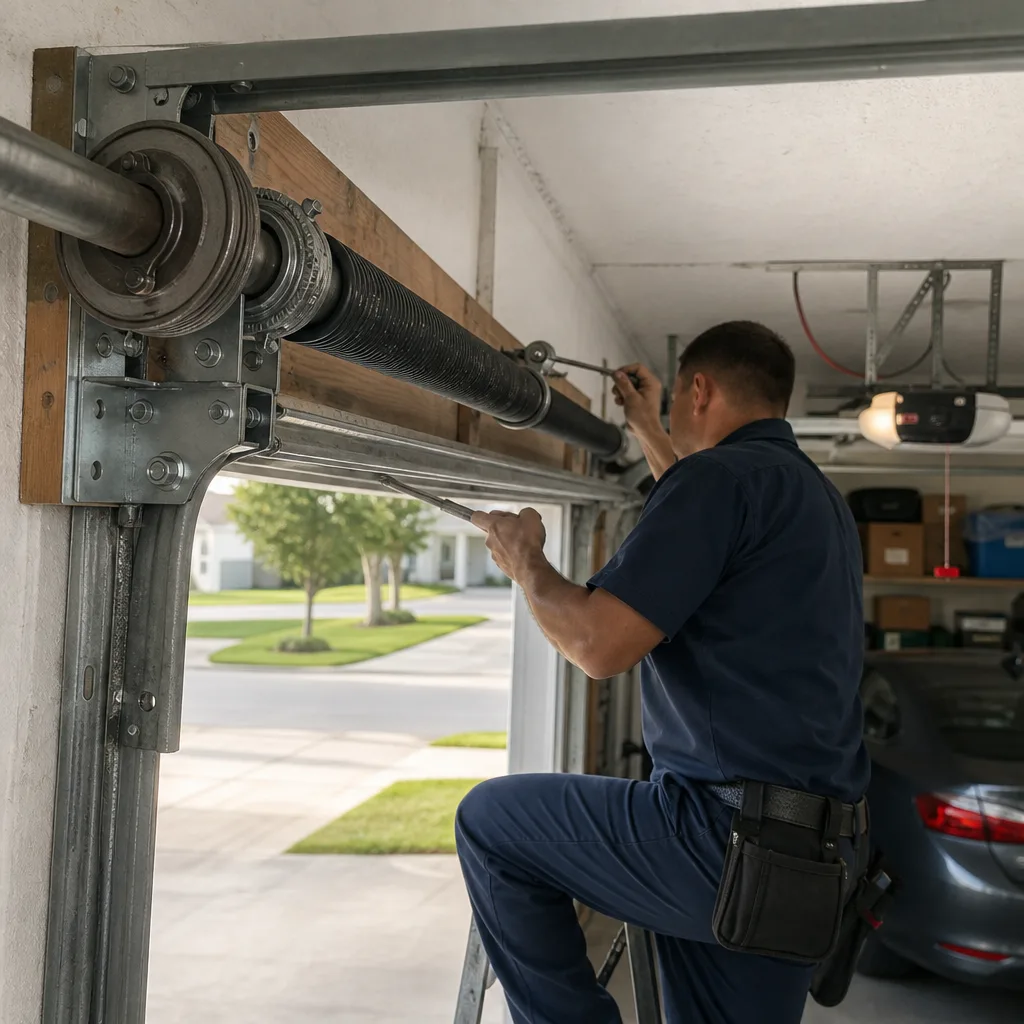 After
After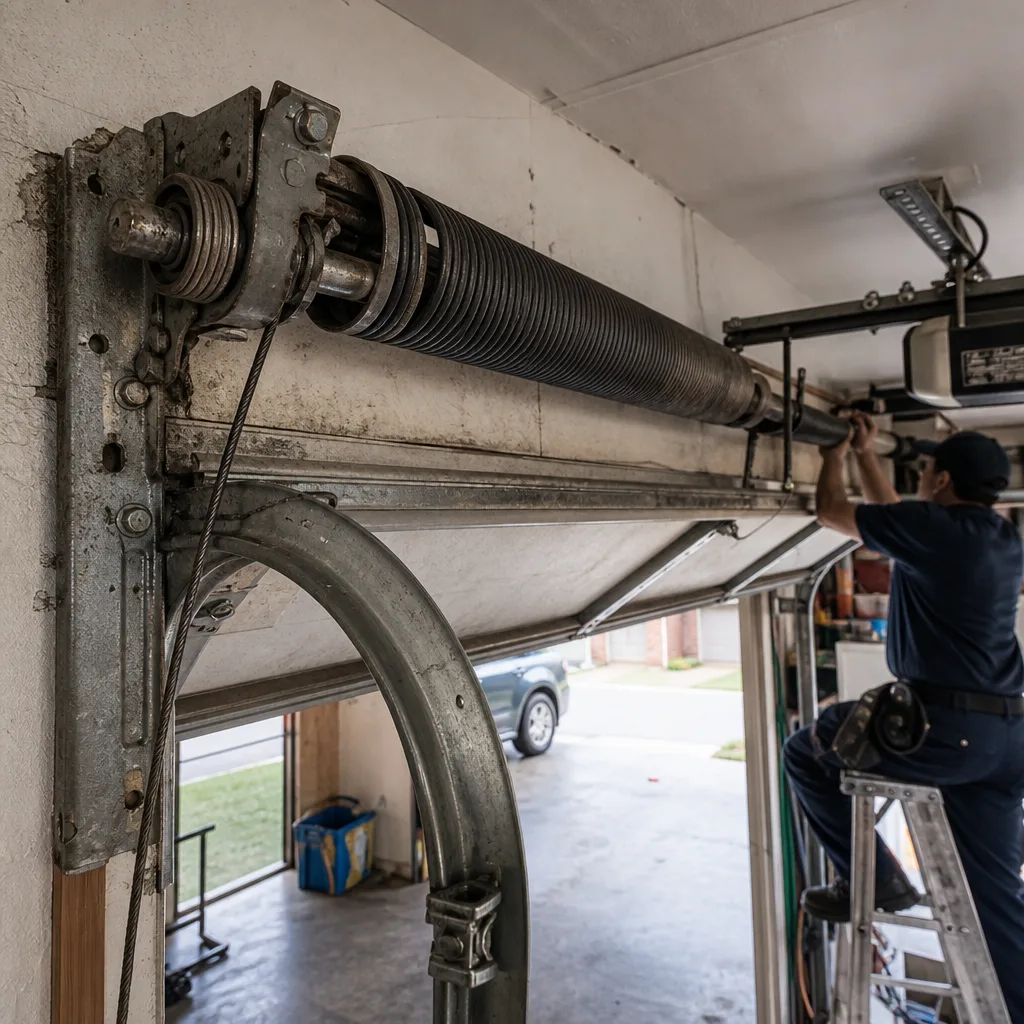 Before
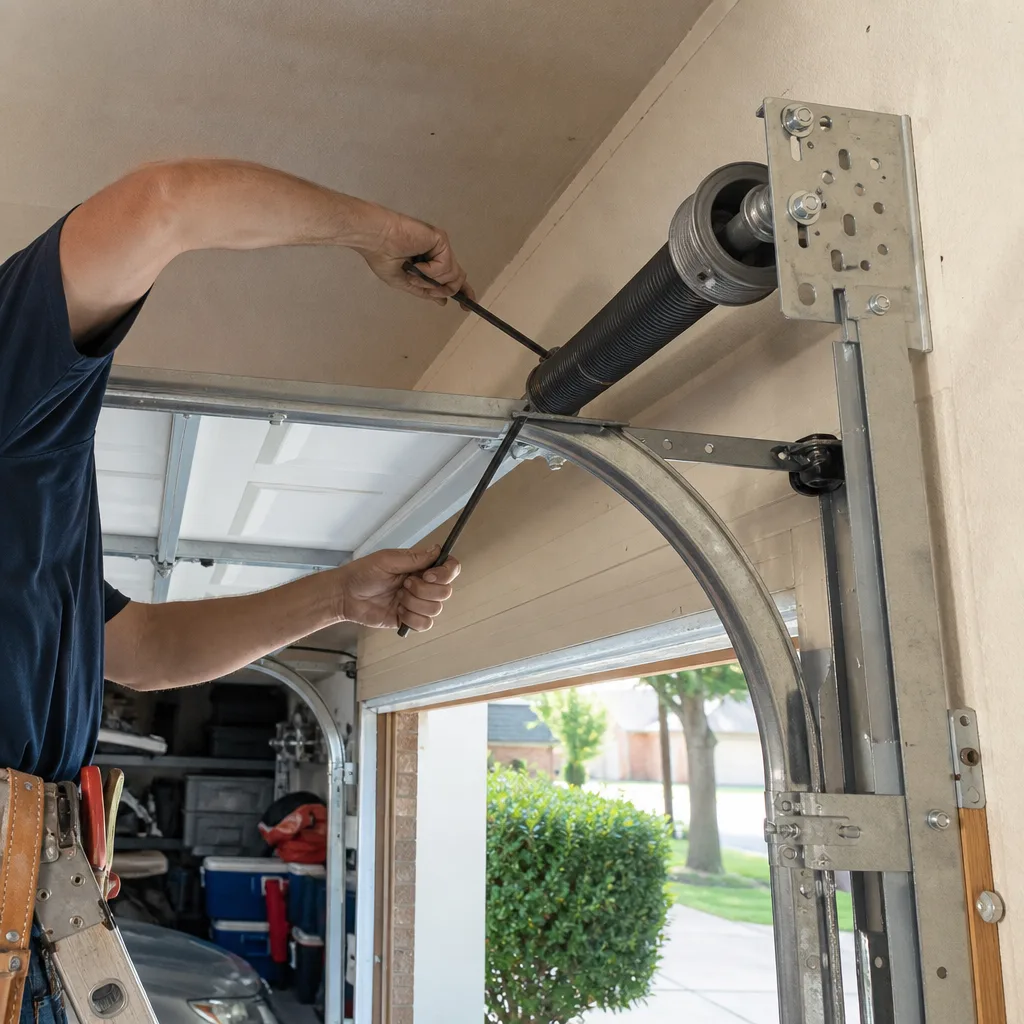 After
AfterThe Complete Guide to Garage Door in Richmond
Most garage door guides are written for a climate that isn’t yours. Richmond’s average humidity sits above 75% for half the year, and that single fact changes which materials last, which springs fail first, and which openers corrode quietly until they don’t. In our 42 years serving Fort Bend County, we’ve learned that Richmond homeowners who understand their specific environment spend less on repairs and replace their doors less often. This guide covers what actually matters here: clay soil movement, Gulf Coast humidity, hurricane ratings that mean something, and how to spot trouble before it traps your car on a Monday morning. For more guides & resources tailored to Texas homeowners, see our blog.
Quick Answer
Garage doors in Richmond face a unique combination of high humidity, expansive clay soil, and hurricane wind loads that accelerate wear and shift door alignment. A well-maintained steel door with proper wind-load rating, inspected twice yearly for track plumb and spring tension, typically lasts 15-20 years in Richmond conditions. The most common failure we see is spring fatigue from extra cycles in humid months, followed by opener electronics damaged by moisture infiltration.
Table of Contents
- How Richmond’s Climate Wears Garage Doors Differently
- Fort Bend County Clay Soil and Door Alignment
- Which Door Materials Last in Gulf Coast Humidity
- Hurricane-Rated vs. Wind-Load-Rated: What Richmond Homes Need
- Why Richmond Springs Fail Faster Than National Charts Predict
- Garage Door Parts: A Plain-Language Glossary
- A Richmond Homeowner’s Maintenance Checklist
- Choosing an Opener That Survives Richmond Summers
How Richmond’s Climate Wears Garage Doors Differently
Richmond sits at the western edge of the Houston metro, close enough to the Gulf to catch its moisture but far enough inland to miss the salt spray that eats coastal hardware. That distinction matters. We don’t see the same rapid corrosion as Galveston or Freeport, but we do see a slower, more insidious pattern: moisture accumulation in enclosed spaces, seasonal swelling of wood components, and electronics that fail not from dramatic flooding but from years of 80% humidity working into circuit boards.
The annual pattern looks like this. From May through October, humidity stays elevated enough that condensation forms on cool metal surfaces inside garages, especially on north-facing doors that never see direct sun. That moisture feeds rust on uncoated springs, degrades nylon roller bearings, and seeps into opener housings through worn gaskets. Then the “winter” months bring dry cold snaps that contract metal and reveal the damage: cracked seals, loosened fasteners, and tracks that no longer sit true.
We’ve replaced springs in Richmond’s Pecan Grove neighborhood that tested at half their rated cycle life. The national chart said 10,000 cycles. The reality was closer to 6,500. The difference wasn’t defective material. It was the additional friction from swollen, misaligned components working against each other through humid months. The door still moved, but everything worked harder.
Here’s what Richmond humidity specifically affects:
- Steel springs: Surface rust pits the wire, creating stress risers that accelerate fatigue failure. Galvanized or powder-coated springs last roughly 40% longer here.
- Wood and composite doors: Real wood absorbs moisture and swells, stressing hinges and warping panels. Wood composites with fiberglass facing resist this but still need sealed edges.
- Opener electronics: Circuit boards in non-weatherized housings develop intermittent faults. We see this most in budget openers installed by builders in Richmond’s newer subdivisions.
- Weatherstripping: PVC and rubber seals harden faster in UV-plus-humidity cycles, losing flexibility and cracking by year four instead of year seven.
- Track hardware: Rollers and hinges bind when humidity swells any wood backing or framing, increasing cycle load across the system.
The practical takeaway: a door that would coast through ten years in Phoenix needs more attention in Richmond. Not dramatically more, but specific attention to moisture management and more frequent inspection of the components that humidity attacks first. For a detailed look at what this extra care costs over time, see our Garage Door Cost Breakdown: The Richmond Homeowner’s Reference for 2026.
Fort Bend County Clay Soil and Door Alignment
This is the factor most national guides miss entirely. Fort Bend County sits on the Beaumont Formation, a deep layer of expansive clay that swells when wet and shrinks when dry. A single Richmond lot can move vertically by two inches between a wet spring and a dry August. That movement doesn’t crack slabs evenly. It tilts them. And a garage door frame mounted to a tilted slab is no longer plumb.
We see the results in neighborhoods across Richmond. In Aliana, where newer fill soils are still settling, we find doors with consistent gaps at the bottom corner. In Long Meadow Farms, established enough for mature trees, root systems and irrigation patterns create uneven moisture that tilts slabs in less predictable ways. In the historic areas near Morton Street, century-old pier-and-beam foundations shift on their own schedule entirely.
The warning sign is on the floor, not the door. Before the door itself looks crooked, you’ll see daylight under one corner of the bottom seal. Or the door will scrape on one side while the opposite corner shows a growing gap. These are slab-movement symptoms, not door-wear symptoms. A technician who adjusts the track without checking slab level will have you calling again in six months.
Here’s how to check yourself, safely:
- Close the door and kill the power. Unplug the opener so no one activates it while you’re working near the track.
- Check the floor gap with a flashlight. Lie on the floor and shine light across the threshold. A consistent thin line of light is normal. A wedge-shaped gap, wider on one side, suggests slab tilt.
- Measure track plumb with a level. Hold a four-foot level against the vertical track on each side. Both tracks should be plumb within 1/4 inch over that length. If one leans and the other doesn’t, the frame has shifted with the slab.
- Look for cracked or separated sealant between the garage floor and the driveway approach. This indicates where soil movement is most active.
- Note any new cracks in the drywall above the garage door header. These suggest frame movement that may have distorted the opening.
If you find slab movement, the fix isn’t a garage door adjustment. It’s foundation evaluation first, then door realignment. We work with several Richmond foundation repair companies and can coordinate the sequence so you’re not paying twice for the same correction. Garage Door Repair in Richmond often starts with diagnosing whether the problem is the door or what the door is attached to.
Which Door Materials Last in Gulf Coast Humidity
Richmond homeowners choosing a new door face a material question that doesn’t arise in drier climates: not just “what looks good” but “what won’t become a maintenance burden in humidity.” We’ve installed and serviced every major material in Richmond conditions. Here’s what actually holds up.
Steel: The Practical Default
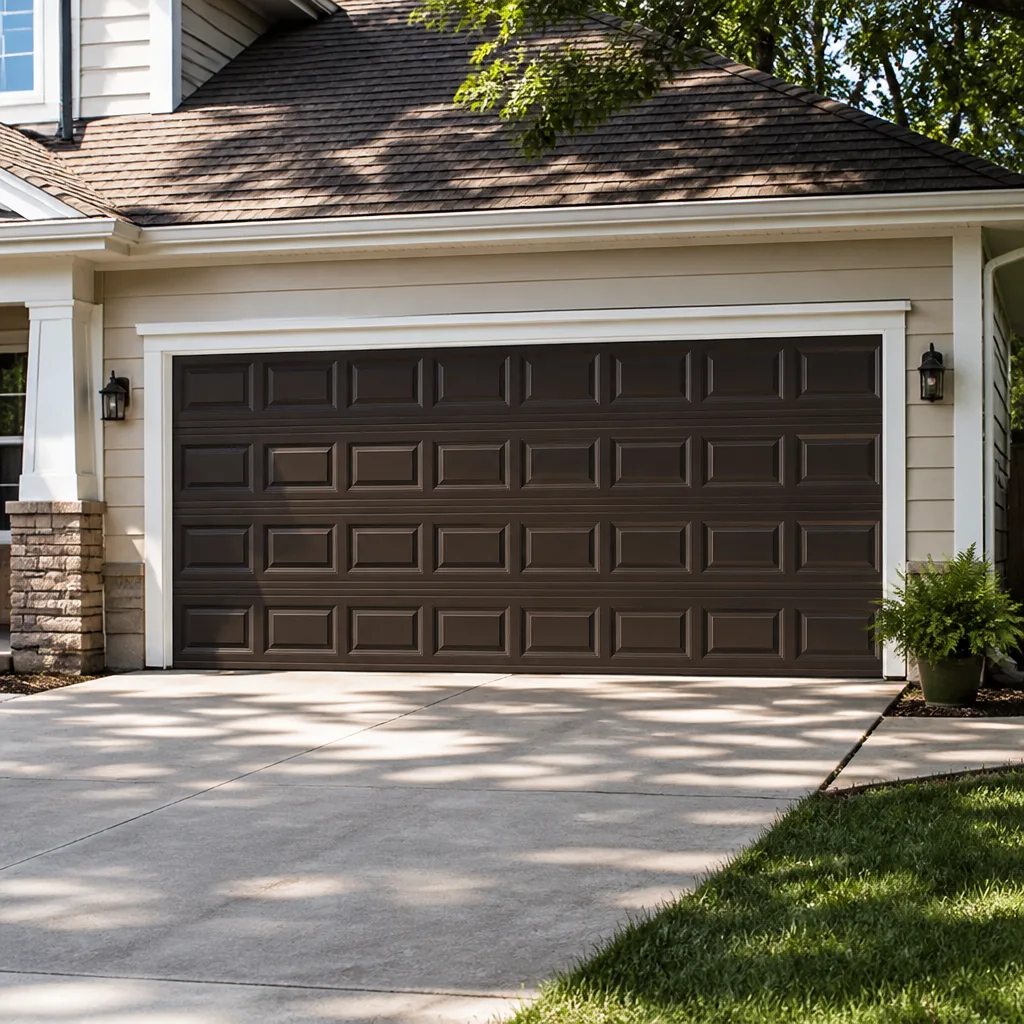
Steel remains the most common choice for Garage Door Installation in Richmond, and for good reason. But not all steel is equal. The critical spec is gauge, and the critical detail is facing. A 24-gauge steel door with a baked-on polyester finish and insulated core will outlast a 26-gauge uninsulated door by a decade in Richmond humidity. The heavier steel resists denting that breaches the finish. The insulation reduces condensation on interior surfaces. The quality finish prevents the rust that starts at scratches.
We install Clopay and Amarr steel doors most often. Both offer Galvalume substrate options, an aluminum-zinc coating that sacrifices itself before the steel rusts. In Richmond’s humidity, that’s worth the modest upcharge.
Wood and Wood Composite: Beauty with Burden
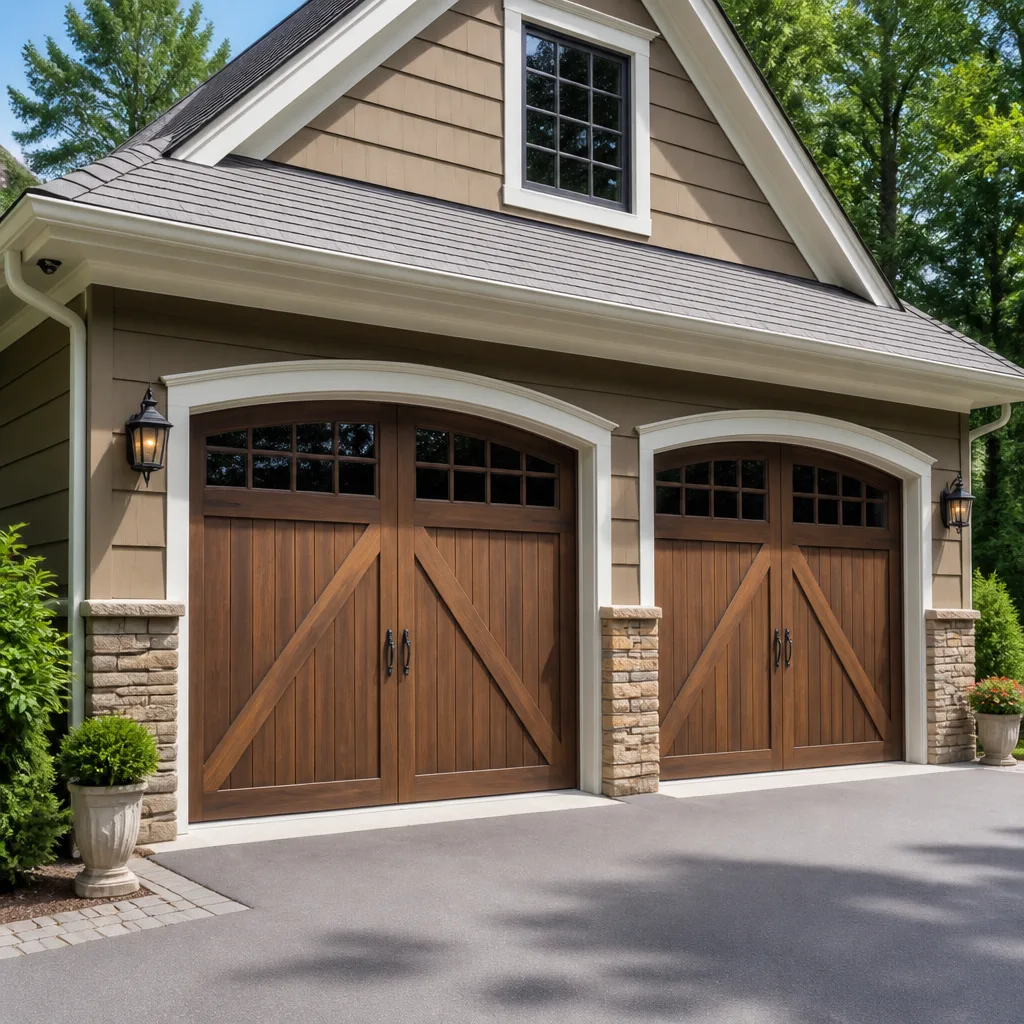
Real wood doors, typically cedar or mahogany, are stunning on Richmond’s traditional and Hill Country-influenced homes. They are also the highest-maintenance choice. Wood absorbs moisture, swells, and stresses hardware. Without annual resealing, a wood door in Richmond will show hinge misalignment by year three and panel warping by year five. We’ve replaced wood doors in the Pecan Grove area that were structurally sound but cosmetically ruined because the homeowner assumed factory finish was sufficient.
Wood composites, specifically fiberglass-faced models with steel or composite frames, offer 80% of the look with 20% of the maintenance. The fiberglass face doesn’t absorb moisture. The key detail is edge sealing. Any cutout for windows or hardware must be field-sealed, or moisture will wick into the core.
Aluminum and Glass: The Modern Option
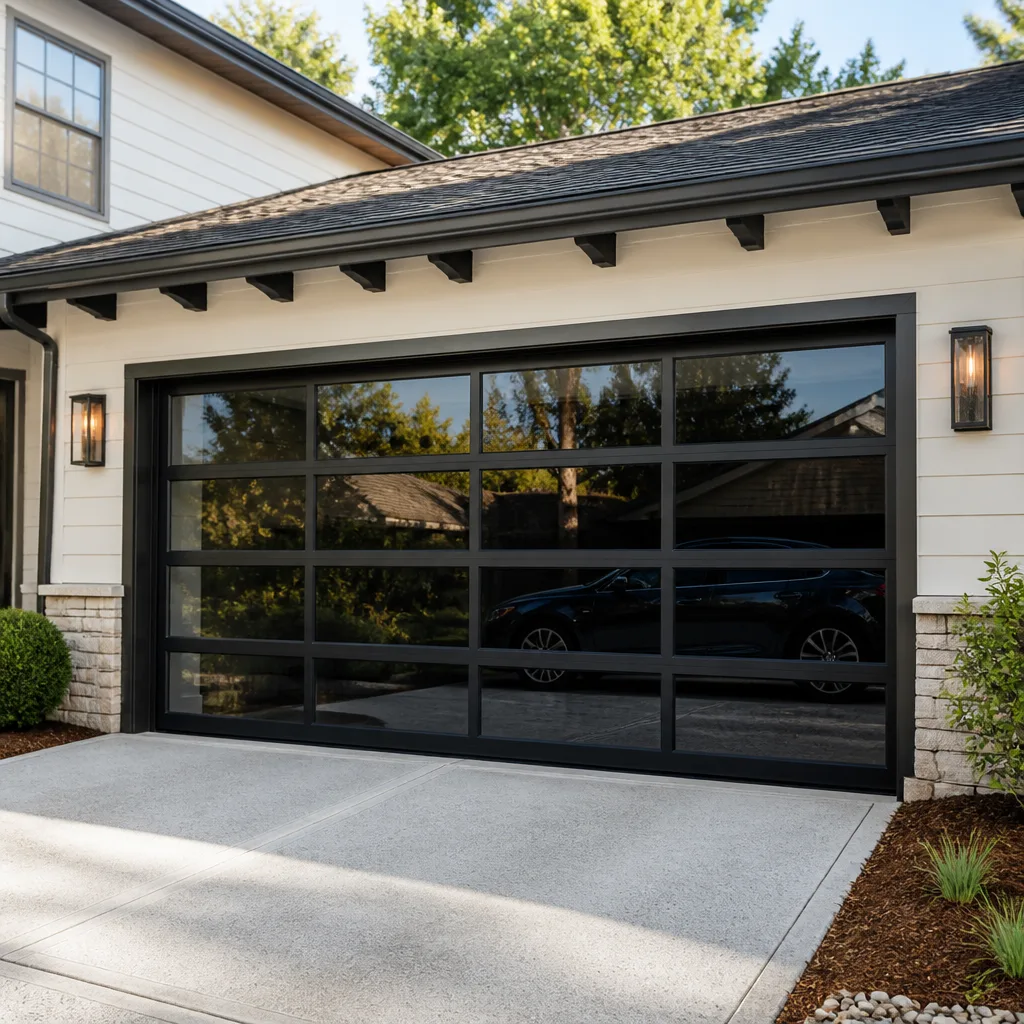
Full-view aluminum doors with glass panels have gained popularity in Richmond’s contemporary builds. Aluminum doesn’t rust, which is genuine advantage. But the hardware and fasteners are still steel, and the glass seals can degrade. These doors also conduct heat, making garage interiors measurably warmer, which increases air conditioning load if the garage shares a wall with conditioned space.
Vinyl: Limited Application
Vinyl doors resist dents and corrosion but become brittle in temperature extremes. Richmond’s summer heat softens vinyl enough that heavy doors can sag. We rarely recommend vinyl for double-car openings wider than 16 feet.
| Material | Best For | Richmond Lifespan | Maintenance Level |
|---|---|---|---|
| 24-gauge steel, insulated, quality finish | Most Richmond homes | 18-25 years | Low: annual inspection, touch-up scratches |
| Wood composite, fiberglass-faced | Traditional aesthetics, moderate budget | 15-20 years | Medium: reseal edges every 2-3 years |
| Real wood, cedar/mahogany | High-end custom homes | 10-15 years with care | High: annual sealing, hardware adjustment |
| Aluminum full-view | Contemporary architecture | 15-20 years | Medium: seal and hardware inspection |
| Vinyl | Single-car, budget-focused | 10-14 years | Low but with sag risk on wide doors |
Hurricane-Rated vs. Wind-Load-Rated: What Richmond Homes Need
After Hurricane Harvey in 2017, Richmond homeowners became more aware of garage door wind resistance. But the terminology confuses many people, and some contractors exploit that confusion. Here’s the distinction that matters for your specific address.
Wind-Load-Rated means the door is engineered to withstand a specific pressure measured in pounds per square foot (PSF), tested to ANSI/DASMA 108 standards. The required PSF for your home depends on your location’s design wind speed, exposure category, and building height. In Richmond, most homes need 20-35 PSF. Homes on open prairie or near water may need higher.
Hurricane-Rated is not a formal standard. It’s marketing language that usually means “meets Miami-Dade County requirements,” the strictest in the nation. A Miami-Dade-approved door exceeds what Richmond requires. That’s not bad, but you may pay 30-50% more for protection you don’t need.
Here’s where Richmond’s geography matters. The city sits in Fort Bend County, which is inland enough that Miami-Dade standards are not mandated. However, certain flood zones and newer developments with specific HOA requirements may demand higher ratings. We’ve installed wind-load-rated doors in Richmond’s Lakes of Bella Terra that met code at standard cost, while a home in a nearby flood-prone pocket needed the full Miami-Dade package for insurance compliance.
The practical check: look at your wind mitigation inspection report if you have one, or ask your insurance agent what PSF rating they require for premium credits. Then buy to that spec, not above it. A properly installed 25 PSF door with reinforced tracks and adequate anchorage protects a typical Richmond home. The failure point in most wind events isn’t the door panel. It’s the track pulling out of the jambs or the opener arm tearing free.
We specify and install wind-load-rated doors from Clopay and Amarr with the complete hardware kit, not just the labeled panel. The label without the reinforced track, heavy-duty hinges, and proper fasteners is incomplete protection. Garage Door Installation in Richmond for wind load is a system specification, not a product selection.
Why Richmond Springs Fail Faster Than National Charts Predict
Garage door springs are rated in cycles, one cycle being a full open and close. Standard torsion springs are rated at 10,000 cycles. With typical residential use of 3-4 cycles daily, that’s roughly 7-10 years. But Richmond’s conditions chew through that estimate faster than the chart suggests.
Three local factors accelerate spring fatigue:
- Humidity-induced friction: When rollers, hinges, and cables corrode or swell, the door requires more force to move. The spring works harder on every cycle. A 10% increase in operating friction translates to roughly 15% faster fatigue.
- Temperature cycling: Richmond’s summer garage interiors reach 110°F regularly. Winter mornings drop to the 40s. That 60-degree swing changes steel temper slightly and stresses the spring with thermal expansion and contraction.
- Clay soil misalignment: A door that’s out of plumb binds in the track. The opener and spring fight that binding. We’ve measured doors in Richmond’s Fieldstone subdivision pulling 25% more amperage than spec due to track misalignment alone.
The result: we replace springs in Richmond at 6,000-8,000 actual cycles, not 10,000. The spring isn’t defective. The environment made it work harder.
There’s also the matter of sizing. National spring charts assume standard door weight and standard conditions. Richmond’s humidity adds weight to wood doors through moisture absorption. A 16×7 wood composite door that weighs 185 pounds dry can approach 200 pounds in August. An installer who sizes springs to the dry weight undersizes for reality. The spring is perpetually overloaded.
Our approach: we weigh doors in their current condition, not from factory specs. We specify springs at 25% above calculated cycle need for Richmond conditions. And we always replace springs in matched pairs, even when only one is broken. The unbroken spring has the same cycle count and the same fatigue. Replacing one guarantees a callback when the other fails six months later.
Safety note: Torsion springs store lethal energy. A standard residential spring holds enough torque to cause serious injury or death if released improperly. We do not recommend DIY spring replacement. The savings are not worth the risk. Our technicians are trained to release and reset torsion systems safely, and we carry the correct winding bars and gauges for every common door size.
Garage Door Parts: A Plain-Language Glossary
When you call for service, describing the problem accurately saves diagnostic time and prevents confusion. Here’s what each part does, in terms you can use on the phone.
Torsion Springs
The heavy coil above the door, mounted on a steel shaft. These do the actual lifting. A broken spring is obvious: the door won’t open, or it opens a few inches and stops. If you see a gap in the coil, or two separate pieces of spring, it’s broken. Never operate a door with a broken spring. The opener will try to compensate and burn out its motor.
Extension Springs
Older or lighter doors use these, stretched along the horizontal track on each side. They’re less common in modern Richmond installations but still present in homes built before 1990. These require safety cables running through them. If an extension spring breaks without the safety cable, it can fly with lethal force.
Cables
Braided steel lines that connect the spring system to the bottom corners of the door. Frayed cables are a warning. A snapped cable lets the door drop unevenly and jam in the track. Check cables monthly for rust, fraying, or broken strands.
Rollers
The wheels that ride inside the track. Nylon rollers run quieter but degrade faster in humidity. Steel rollers last longer but rust and get noisy. We recommend sealed-bearing nylon rollers for Richmond, replaced every 7-10 years.
Hinges
Connect door panels and allow the door to bend around the track curve. The center hinge on each panel carries a roller. Cracked hinges stress the door and cause binding. Hinges are numbered by position, bottom to top.
Track
The steel channel that guides rollers. Vertical tracks on each side, horizontal tracks running back toward the opener. Bent or misaligned track causes binding and premature wear. Track brackets attach to the door frame, not the drywall.
Weatherstripping
The flexible seal at the door bottom and around the frame. Bottom seal is replaceable without replacing the door. Frame seal is often integral to the track or retainer. Hard, cracked, or daylight-leaking seal costs you cooling dollars and lets pests enter.
Opener
The motorized unit that automates door movement. It does not do the heavy lifting; springs do. The opener’s job is control and assistance. If your door is hard to lift manually, the opener will fail prematurely regardless of brand. Garage Door Opener in Richmond selection should account for humidity-rated electronics and sufficient horsepower for your door’s actual weight.
Safety Sensors
The two small boxes near floor level, one each side of the door, connected by an invisible beam. If the beam breaks while the door is closing, the door reverses. Misaligned or dirty sensors are the most common cause of “door won’t close” calls. Clean the lenses and check alignment before calling for service.
Emergency Release
The red cord hanging from the opener trolley. Pulling it disengages the door from the opener so you can lift manually. Use it when the power is out or the opener fails. Re-engage by pulling the cord toward the opener or running the opener until the trolley reconnects.
A Richmond Homeowner’s Maintenance Checklist
Preventive maintenance in Richmond differs from generic advice because of our specific wear patterns. Here’s what to do, when, and why.
Every Three Months
- Lubricate moving parts. Use a silicone-based spray, not WD-40. Apply to hinges, rollers, and the torsion spring. Wipe excess. The silicone film repels moisture, critical in Richmond humidity. Avoid greasing the track itself; it collects grit.
- Test door balance. Disconnect the opener and lift the door halfway manually. It should stay put. If it falls or rises, springs need adjustment. This is the single most important test for preventing opener failure.
- Inspect cables and springs. Look for rust, fraying, or coil gaps. Photo-document anything suspicious so you can compare next quarter.
- Clean safety sensors. Wipe lenses with a dry cloth. Check that the LED indicators on both units are steady, not blinking.
Every Six Months
- Check weatherstripping. Close the door on a bright day and look for light leaks. Replace bottom seal if cracked or compressed. In Richmond, we see faster UV degradation on south and west exposures.
- Tighten hardware. Vibration loosens track bolts and opener mounting brackets. Check with a socket wrench, not finger-tight.
- Inspect slab and frame. Look for new cracks, sealant separation, or door-frame gaps. Measure any floor gap change from your previous check.
- Test auto-reverse. Place a 2×4 flat on the threshold. The door should reverse on contact. If it doesn’t, the force setting needs adjustment.
Annually
- Professional inspection. We offer our $89 Seasonal Tune-Up for this purpose. A trained eye catches spring fatigue, track wear, and opener issues before they become emergencies. In Richmond’s conditions, annual professional eyes-on is cost-effective insurance.
- Evaluate insulation and sealing. If your attached garage shares a wall with living space, poor door insulation raises cooling costs measurably. Check the R-value of your door and the condition of perimeter seal.
The $89 tune-up includes lubrication, balance test, safety check, and a written condition report. For Richmond homeowners who’ve been burned by surprise repair bills, this is a square deal: know what’s coming before it fails.
Choosing an Opener That Survives Richmond Summers
Opener selection is where we see the most unnecessary expense and the most premature failure. Richmond’s heat and humidity punish electronics and motors differently than milder climates. Here’s how to choose once, correctly.
Horsepower: Match Reality, Not Aspirations
A 1/2 horsepower opener is sufficient for a properly balanced steel door up to 16 feet wide. A 3/4 horsepower unit covers heavier doors or high-lift track configurations. Oversizing doesn’t help and wastes energy. Undersizing burns out the motor. The critical factor is door condition, not door size. A poorly balanced 8-foot door can kill a 3/4 horsepower opener faster than a balanced 16-footer runs on 1/2 horsepower.
Drive Type: Belt, Chain, or Screw
Belt drive is quietest, best for bedrooms above or adjacent to the garage. The reinforced rubber belt handles Richmond humidity without stretching. Chain drive is most durable and economical but noisier. Screw drive, once common, has largely been replaced by belt and chain designs; the screw mechanism is vulnerable to lubrication breakdown in heat.
We install LiftMaster belt-drive openers most often in Richmond’s residential applications. The belt material resists humidity degradation, and the motor housing seals are adequate for our conditions. Chamberlain models share the same parent company and equivalent quality; the distinction is primarily feature set and warranty terms.
Smart Features: Useful or Gimmick?
MyQ connectivity, battery backup, and LED lighting are genuinely useful. Camera integration is newer and depends on your comfort with app-based monitoring. For our typical Richmond customer, we recommend battery backup (required by Texas law for new installations since 2019) and MyQ for the convenience of remote status checking. Camera features are optional; the value depends on whether you receive deliveries to the garage.
Humidity Protection
The detail most buyers miss: opener circuit board coating. Standard consumer-grade openers use conformal coating at minimal thickness. Models rated for “harsh environment” or “high humidity” use thicker, more complete coating. In Richmond, that’s worth specifying. We’ve replaced prematurely failed Genie and Craftsman openers that were fine mechanically but had board corrosion from humidity infiltration. The repair cost approaches replacement cost.
Installation Quality
An opener is only as good as its mounting. The header bracket must attach to structural framing, not drywall. The rail must be level. The safety sensors must be precisely aligned at 6 inches above floor level. Sloppy installation causes intermittent operation, false reversals, and premature wear. Our technicians are trained to the K.E.Y.S. standard: Krafted right, Every time, Your home first, Standing behind it. The installation includes written settings documentation and a 90-Day Done Right Promise.
Common Mistakes to Avoid
- Ignoring the floor gap. A growing gap under one corner means slab movement, not door wear. Adjusting the track without addressing the slab guarantees repeat failure. In Richmond’s clay soil, always check slab before blaming the door.
- Buying on brand name alone. LiftMaster, Chamberlain, and Genie all make excellent and mediocre products. The model tier matters more than the logo. We can quote specific model numbers that have proven reliable in Richmond conditions.
- DIY spring replacement. The savings are roughly $200-$350. The risk is permanent injury. Torsion springs are not a homeowner project. We’ve seen the aftermath, and it’s not worth it.
- Neglecting humidity-specific maintenance. Generic advice says “lubricate annually.” In Richmond, quarterly silicone lubrication prevents the moisture damage that annual attention misses. The extra hour per year pays for itself.
- Accepting verbal estimates. A square deal requires a written quote with line items. Our flat-price quotes state the full cost before work begins. No surprises on the bill means no surprises on the bill.
- Replacing only one spring. Matched spring pairs share cycle load. One new spring with one fatigued spring creates imbalance, strains the opener, and guarantees a second service call. We replace in pairs, period.
- Choosing aesthetics over structure for wind load. A beautiful door that fails in a storm is worthless. Verify your wind-load requirement before falling in love with a panel design. We can source attractive doors that meet any reasonable PSF rating.
When to Call a Professional
Some situations demand trained attention. Call a professional when: the door is off the track or cables are detached; a spring is broken or shows a visible gap; the opener hums but the door doesn’t move; the door reverses repeatedly and sensor cleaning doesn’t fix it; you notice a burning smell from the opener motor; the door has been struck by a vehicle, even if it still operates; or you’re planning replacement and need wind-load specification for your address.
Mainspring Garage Door Co. offers free estimates in Richmond. We’ll assess your door’s condition, check slab alignment, quote any needed work with flat pricing stated upfront, and provide a written report you can use for comparison. No pressure, no surprise fees. Call (936) 278-3457 to schedule.
Frequently Asked Questions
Most common repairs in Richmond range from $150 for roller or cable replacement to $350 for spring replacement on a standard two-car door. Off-track repair typically runs $175-$275 depending on whether track damage or hardware replacement is needed. We provide flat-price quotes before any work begins, and our $50 Off Any Repair Over $250 offer applies to qualifying jobs. Call (936) 278-3457 for an exact quote on your specific door - estimates are free.
A quality steel door with proper maintenance lasts 18-25 years in Richmond conditions. Wood doors last 10-15 years with diligent sealing. The limiting factor is usually spring and hardware wear rather than panel failure. Humidity accelerates hardware corrosion, so doors maintained on our quarterly schedule typically reach the upper end of those ranges. Neglected doors often need major repair by year 12.
Most Richmond homes need wind-load-rated doors meeting local building code, not full hurricane-rated Miami-Dade standards. The specific requirement depends on your address, exposure, and insurance terms. We can determine the correct PSF rating for your home and quote appropriately. Over-specifying wastes money; under-specifying risks coverage denial after a storm.
Humidity swells wood components and causes steel hinges and rollers to rust slightly, increasing friction. The opener works harder, and metal-on-metal contact becomes more pronounced. Quarterly silicone lubrication usually resolves this. If noise persists after lubrication, it may indicate worn rollers or loose hardware that needs professional attention.
Mechanically inclined homeowners can sometimes manage opener replacement on a standard door. However, proper safety sensor alignment, force setting calibration, and structural mounting require specific knowledge. Incorrect installation creates liability hazards and voids warranties. Our installation includes written documentation, safety testing, and the 90-Day Done Right Promise. For most Richmond homeowners, professional installation is the square deal.
The tune-up includes full lubrication of moving parts, door balance test, safety sensor alignment and test, auto-reverse verification, hardware tightening, cable and spring inspection, weatherstripping check, and a written condition report with photo documentation. It’s designed to catch the humidity-related wear patterns specific to Richmond before they become expensive failures. Senior and veteran customers receive an additional 5% discount.
The Bottom Line
Richmond’s garage doors face a specific set of challenges: Gulf Coast humidity that degrades electronics and swells wood, expansive clay soil that shifts slabs and knocks doors out of plumb, and wind-load requirements that vary by address rather than applying uniformly. The homeowners who fare best are those who understand these local factors and maintain accordingly. A quality steel door, inspected and lubricated quarterly, with springs sized for actual local conditions, will outlast the national averages by years. The alternative is the slow emergency: the spring that breaks at 6:00 AM, the opener that dies during a holiday weekend, the door that won’t seal when the storm arrives. Prevention costs less than reaction. And a flat-price quote from a company that answers the phone, arrives with parts on the truck, and stands behind the work in writing, is the square deal that Richmond homeowners have deserved for 42 years.
Ready to assess your door’s condition? Call Mainspring Garage Door Co. at (936) 278-3457 for a free estimate. We’ll check your slab alignment, test your spring balance, and quote any needed work with the price stated upfront before a wrench turns. No surprises, no pressure, no voicemail.
Written by Carl Dutton, Owner at Mainspring Garage Door Co., serving Richmond since 2016.