
Last updated September 10, 2026
Full 25-point door and opener safety check with every visit - springs, cables, rollers, tracks, and your LiftMaster or Chamberlain opener included
You get a price before we start. It does not change when the truck arrives.
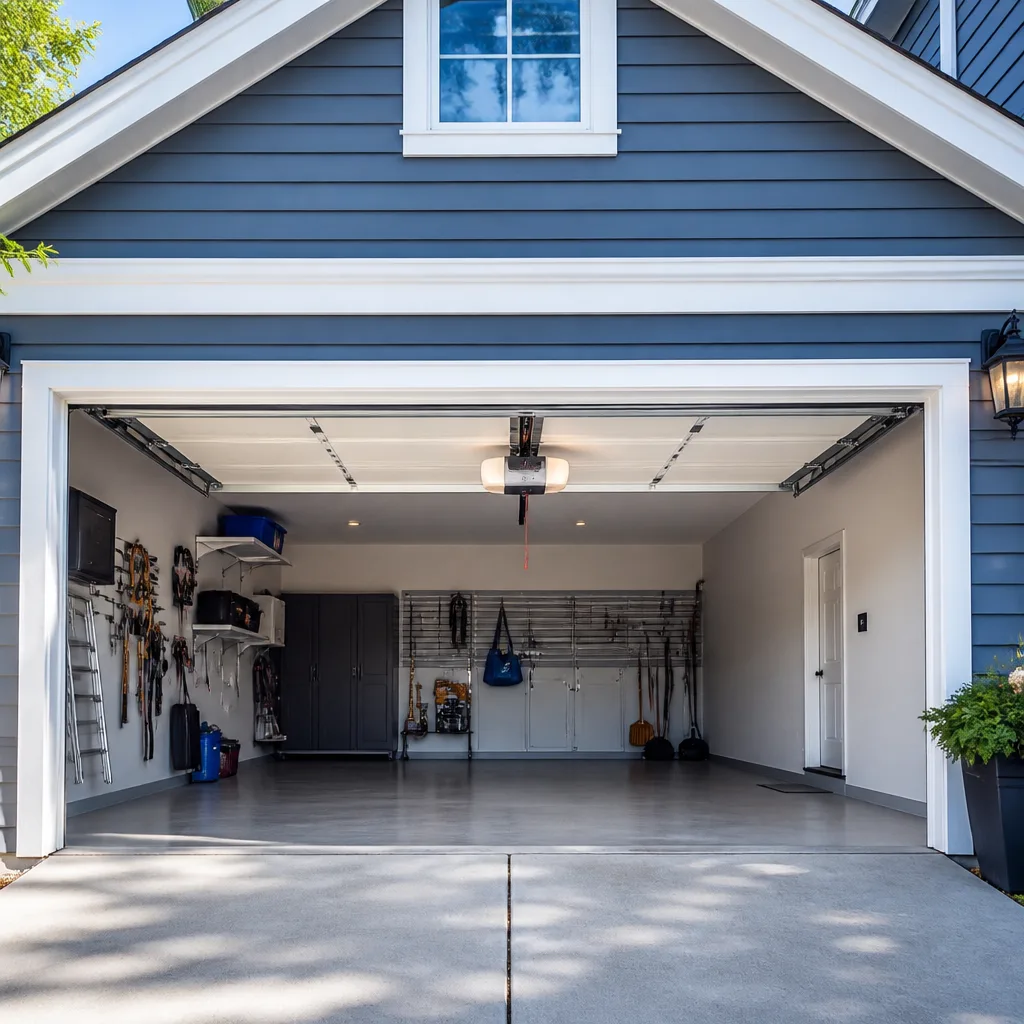
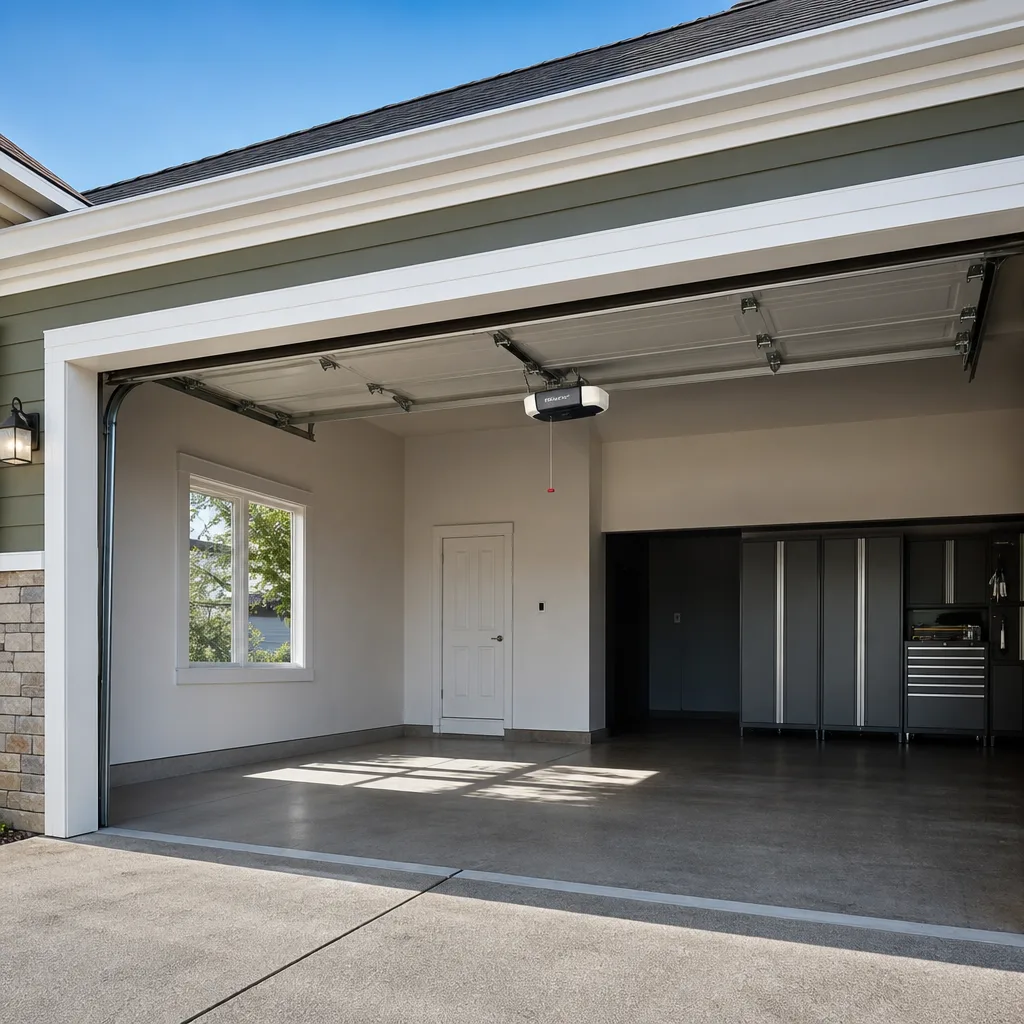
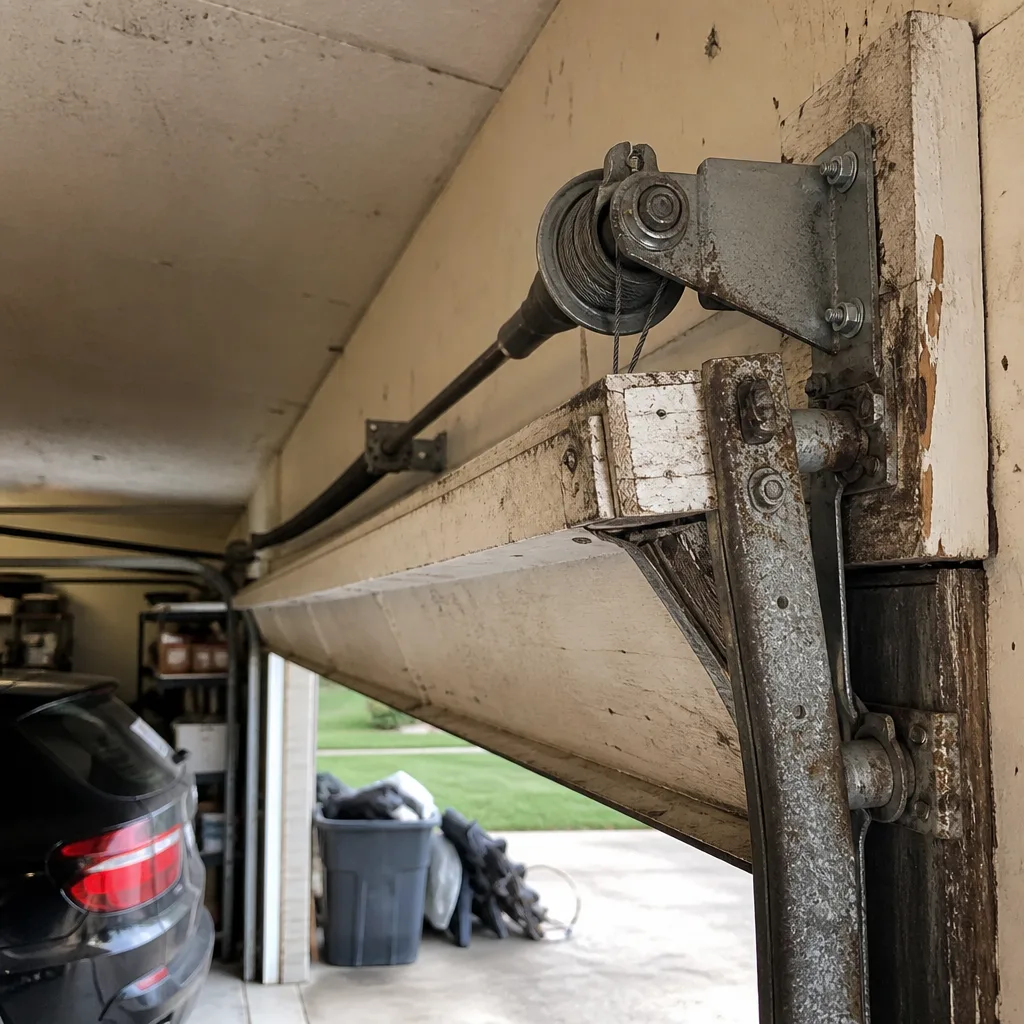 Before
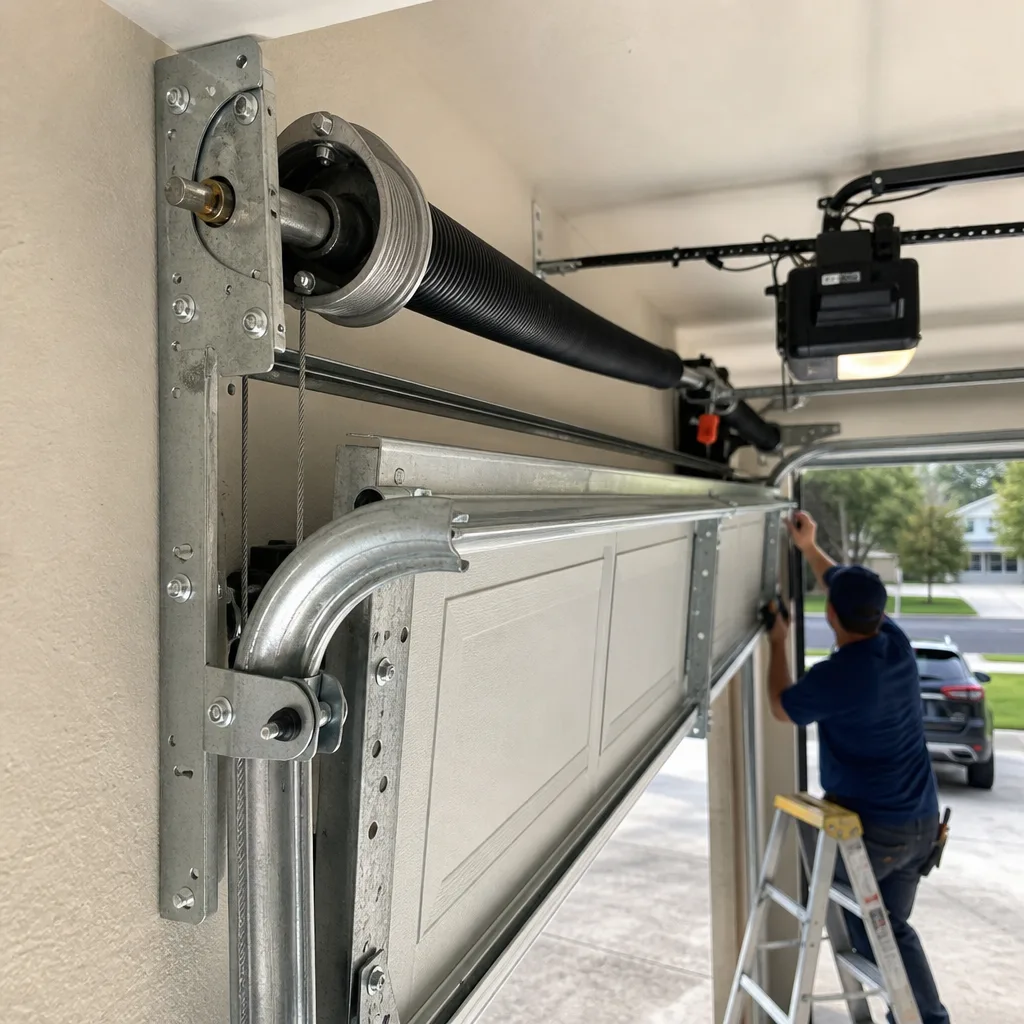 After
After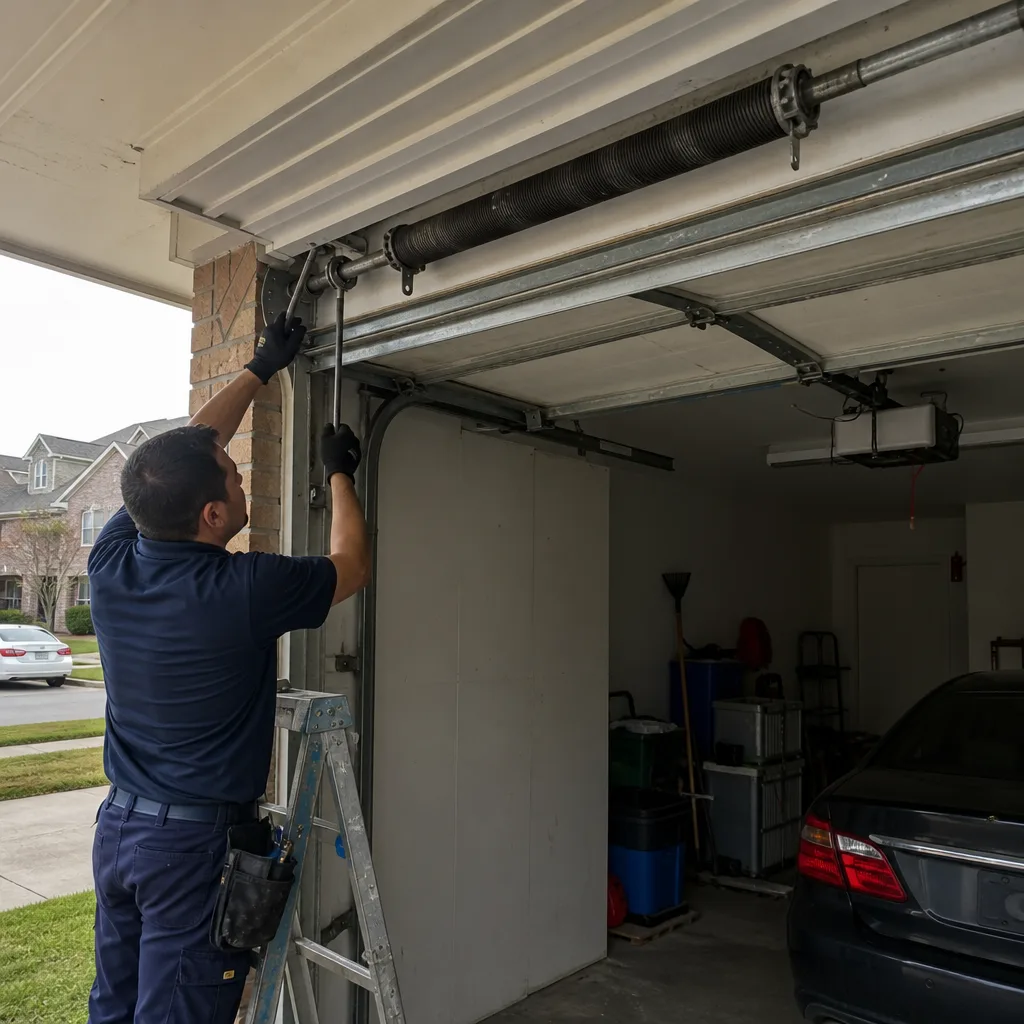 Before
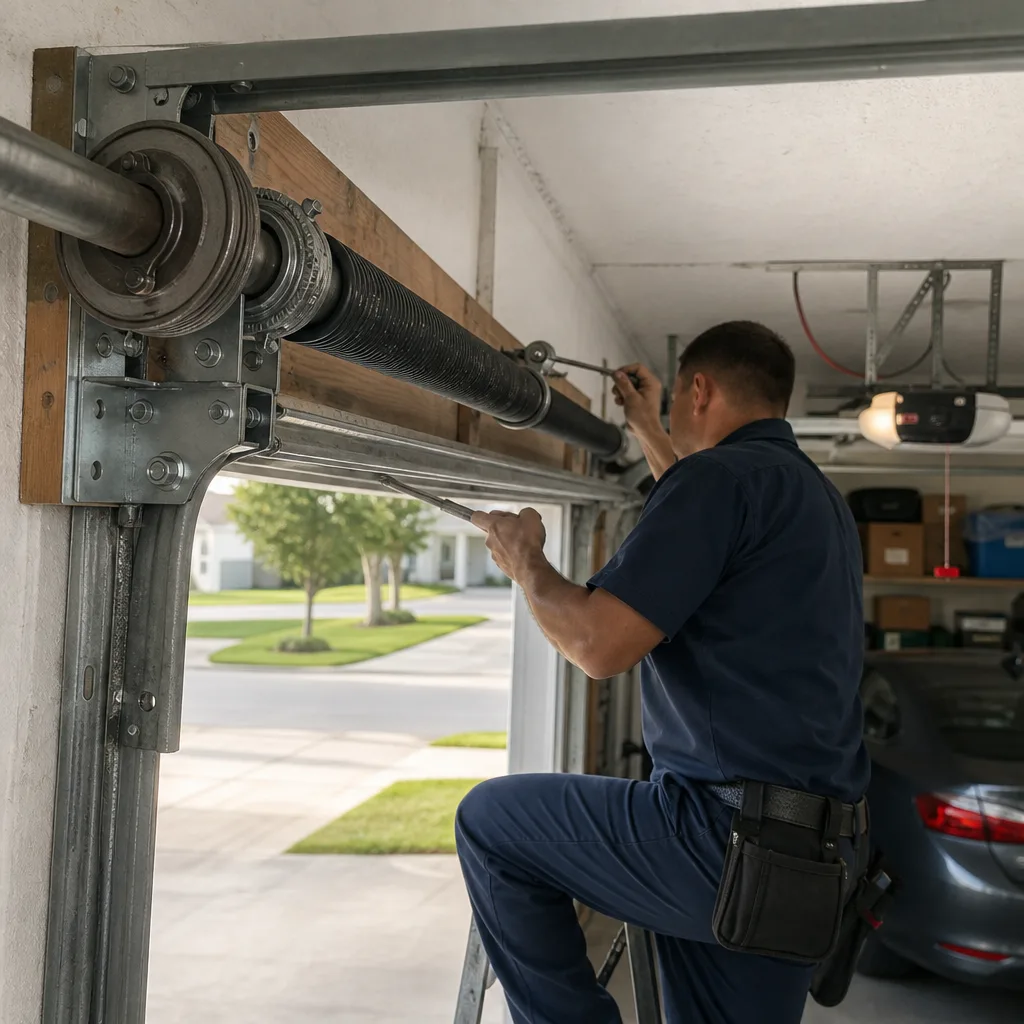 After
After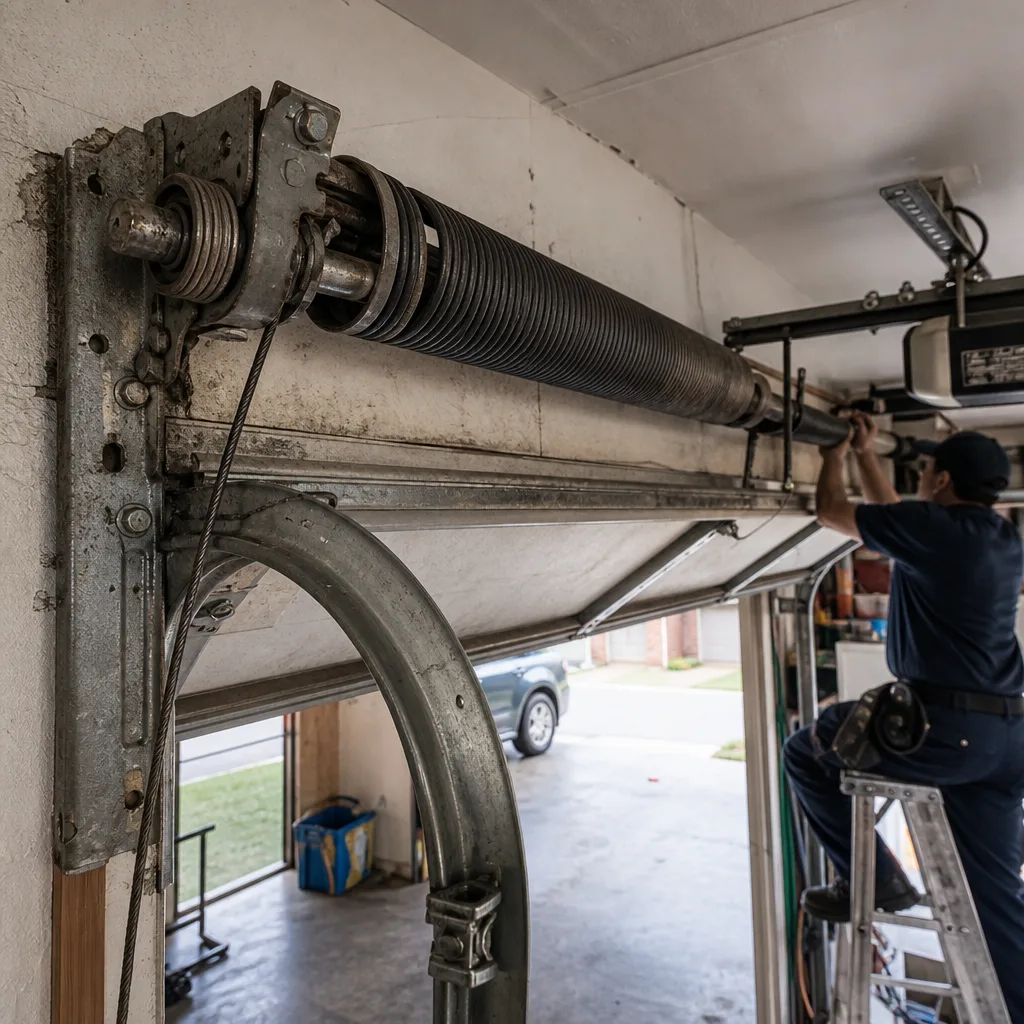 Before
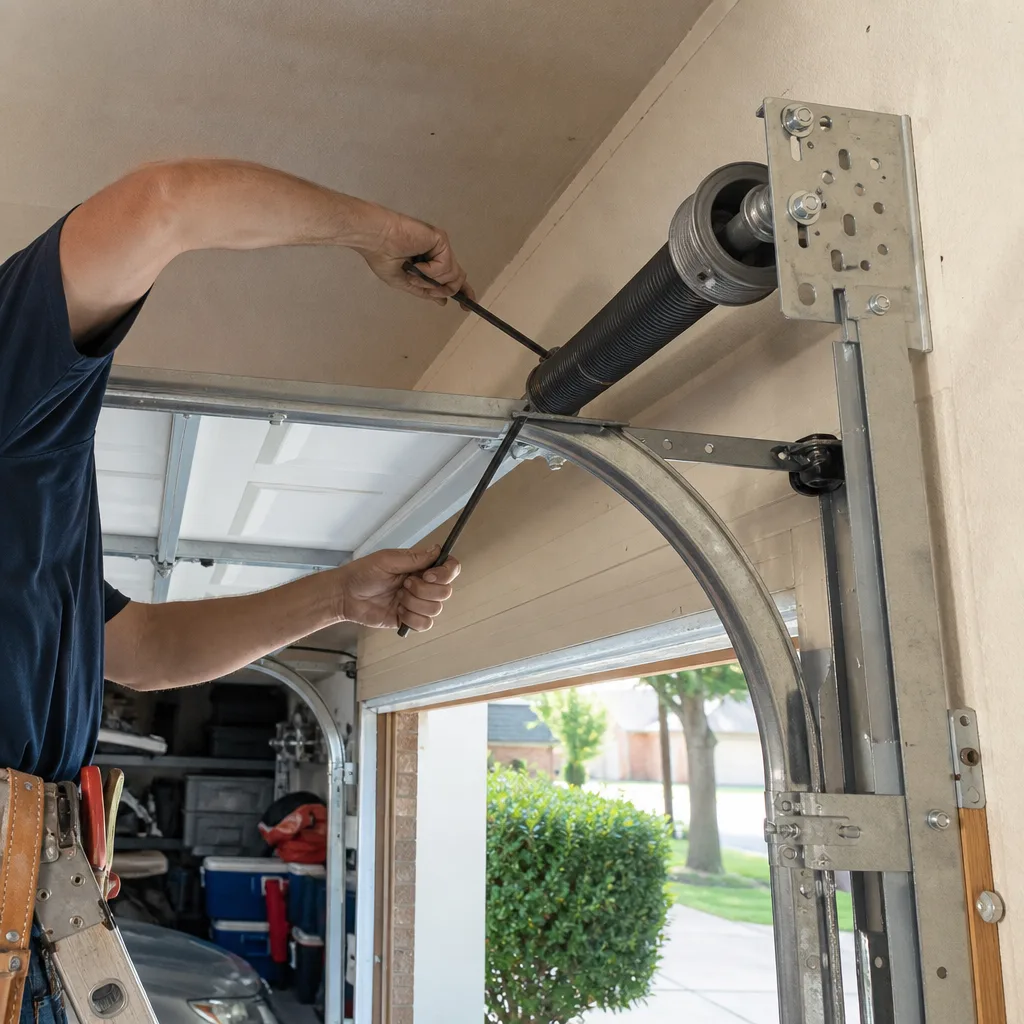 After
AfterGarage Door Permits, Codes & Inspections in TX: What You Need to Know
A garage door replacement that skips a required permit in Fort Bend County doesn’t just risk a fine - it can show up as an unpermitted improvement on a title search and stall a home sale years later. We’ve been installing and replacing doors across Richmond since 2016, and we’ve seen the closing table panic when a title company flags a three-year-old opener installation with no permit on file. This guide explains exactly when Texas law and Fort Bend County code require a permit for garage door work, what the inspection covers, and how to protect your property record before you ever list the house.
Quick Answer
In Fort Bend County, a garage door permit is required for any new installation, structural modification, or opener replacement that adds electrical circuits - but a like-for-like door swap on existing hardware usually does not. Texas wind-load codes apply to all new doors in Richmond’s 120-mph wind zone, and battery-backup openers must meet state electrical and safety standards. Most permits cost $75-$150 and take 3-5 business days to issue, with inspection scheduled after installation.
Table of Contents
- When Is a Garage Door Permit Required in Fort Bend County?
- Like-for-Like Replacement vs. Structural Change
- Texas Wind-Load Requirements for Richmond
- HOA Deed Restrictions in Sugar Land and Missouri City
- The Fort Bend County Permit Process: Cost, Timeline, and Inspection
- What If a Previous Owner Skipped the Permit?
- Garage Door Openers, Battery Backup, and Electrical Codes
- Common Mistakes to Avoid
- When to Call a Professional
- Frequently Asked Questions
- The Bottom Line
When Is a Garage Door Permit Required in Fort Bend County?
Fort Bend County follows the 2021 International Residential Code with Texas amendments, and the county’s Community Development Department interprets garage door work through a straightforward lens: does the project change the structure, the electrical system, or the egress?
A permit is required when you:
- Install a new garage door where none existed before, including conversions of carports or open bays
- Widen, narrow, or reframe the door opening - any modification to the header, jack studs, or rough opening dimensions
- Replace a non-operational door with a different size, style, or weight that requires new spring hardware or track geometry
- Install a new garage door opener on a circuit that does not already exist, or upgrade to a battery-backup unit that needs dedicated wiring
- Add a man door, pass-through door, or window insert that cuts into the door panel or frame
- Install hurricane braces, wind-load posts, or reinforcement kits that attach to the wall framing
A permit is generally not required when you:
- Swap an existing door for the same size and approximate weight on the same torsion spring system and vertical tracks
- Repair or replace broken springs, cables, rollers, or hinges without modifying the door or frame
- Replace an opener on an existing dedicated outlet within the garage, provided no new wiring is run
- Paint, stain, or apply decorative hardware that does not penetrate the door skin
The distinction matters because Fort Bend County can issue a stop-work order for unpermitted structural modifications, and the fine starts at $250 plus doubled permit fees. More seriously, unpermitted electrical work voids most homeowner insurance policies for fire damage in the garage.
In Richmond specifically, the county’s growth has tightened enforcement. Areas like Pecan Grove and Aliana, where new construction is dense and code compliance is actively monitored, see faster inspector response than older unincorporated pockets. If you’re in a newer Richmond subdivision, assume the permit requirement is strictly enforced.
Like-for-Like Replacement vs. Structural Change
This is where most homeowners get tripped up. The county does not care about brand names or colors. They care about whether the replacement changes the load path or the opening dimensions.
A true like-for-like replacement means:
- The new door matches the old door’s width and height within 1/4 inch
- The weight is comparable, so the existing torsion spring system and track radius remain adequate
- No modification to the header, jambs, or concrete opening is needed
- The opener, if present, stays on its existing mounting bracket and electrical supply
Change any of these, and you’ve crossed into structural work. Common scenarios that trigger permits:
- Upgrading from a single 8-foot door to a double 16-foot door, which requires a longer header and heavier spring system
- Switching from steel to solid wood, increasing weight by 40-60 percent and requiring new spring calibration
- Installing a high-lift or vertical-lift track system for a car lift or RV clearance, which changes the rear hang and header load
- Adding a walk-through door section, which cuts a 32-inch opening through the panel and requires reinforcement
We’ve replaced doors in Richmond’s Grand Mission and Riverstone subdivisions where the original builder installed lightweight 25-gauge steel doors. Homeowners wanted Clopay or Amarr insulated models with composite overlays. The new doors weighed 85 pounds more. That weight difference required heavier torsion springs, new drums, and often a stiffer header - structural changes every time.
The county inspector will verify the header size against IRC Table R502.5(1). A 16-foot garage door in a one-story home needs a minimum 2×12 header of #2 Douglas fir, or an engineered equivalent. Many 1980s Richmond homes, especially in the original Richmond proper near Morton Street, were built with 2×10 headers that do not meet current span tables. If we open the wall and find an undersized header, the replacement becomes a structural modification and the permit is no longer optional.
Texas Wind-Load Requirements for Richmond
Texas operates under the Texas Department of Insurance Windstorm Inspection Program, and Fort Bend County sits in a 120-mph design wind zone. Every new garage door installed in Richmond must carry a wind-load rating label proving it withstands that pressure.
The specific requirement is a W6 rating for most residential applications - meaning the door is tested to withstand 20 pounds per square foot of wind pressure, equivalent to the 120-mph sustained winds with gust factors that the TDI maps specify for our area. Doors in coastal-exposure zones or on homes with large roof overhangs may need W8 or higher.
What satisfies the code:
- Factory-labeled wind-rated doors from Clopay, Amarr, Wayne Dalton, or Raynor with the W6 sticker intact
- Doors with integral vertical reinforcement struts, not field-applied add-on braces
- Track systems with heavy-duty brackets and jamb brackets rated for the same load
- Proper anchorage to the jambs with minimum 5/16-inch lag screws into solid framing, not just drywall or trim
What does not satisfy the code:
- Any door without a visible, legible wind-load label - period
- Field-modified doors with cut-down panels or added windows that compromise the structural integrity
- Doors rated for inland zones (W4 or below) that were purchased out of region and trucked in
- Aftermarket “hurricane kits” that clip onto standard doors without engineering certification
The TDI inspection is separate from the county building inspection. For new construction or substantial remodels, a TDI windstorm certificate is required before the county will issue a certificate of occupancy. For a standalone door replacement, the county inspector checks the wind-load label during the standard building inspection. If the label is missing, defaced, or shows a W4 rating, the door fails and must be replaced or re-certified by the manufacturer - a process that takes weeks and costs several hundred dollars.
Richmond’s position on the coastal plain means we see the full force of Gulf weather. Hurricane Harvey in 2017 blew garage doors inward across Fort Bend County, pressurizing attics and lifting roofs. The 120-mph standard exists because doors are the largest opening in most homes, and a failed door starts a cascade of structural damage. We won’t install a non-wind-rated door in Richmond, permit or not. It’s not worth the liability, and it’s not a square deal for the homeowner.
HOA Deed Restrictions in Sugar Land and Missouri City
Fort Bend County’s unincorporated areas and its cities operate under different layers of authority. Richmond, Sugar Land, and Missouri City each have municipal building departments, but the subdivisions within them add another layer: deed restrictions enforced by homeowners associations.
These restrictions often exceed county code. Where the county cares about safety and structure, the HOA cares about appearance, uniformity, and property values. We’ve seen HOAs reject doors that passed county inspection because the panel style or color violated the original subdivision covenants.
Common HOA requirements in Fort Bend County subdivisions:
- Material restrictions: Many Sugar Land HOAs, especially in First Colony, Telfair, and Riverstone, require real wood, wood-composite, or premium insulated steel with recessed panel designs. Basic flush steel doors are prohibited regardless of wind rating.
- Color palettes: Missouri City subdivisions like Sienna and Lake Olympia maintain approved color lists. A black door or bright white door may be rejected if the palette specifies earth tones or off-whites.
- Window configurations: Some covenants limit glass area to the top row of panels, or prohibit windows entirely on street-facing doors.
- Hardware finishes: Decorative handles and hinges must match a specified metal tone - oil-rubbed bronze, brushed nickel, or matte black.
- Architectural review timelines: Most HOAs require 30-45 days for architectural committee approval before work begins. This runs parallel to, not in place of, the county permit.
The practical sequence for a Richmond-area homeowner in an HOA:
- Submit the door specifications, manufacturer cut sheet, and color sample to the HOA architectural committee
- Receive written approval before applying for the county permit - some HOAs will issue a conditional approval pending permit
- Apply for the Fort Bend County permit with the HOA approval letter attached
- Schedule installation after both approvals are in hand
- Pass county inspection, then submit the inspection certificate to the HOA for final compliance
Skipping the HOA step and installing first risks a compliance letter, fines of $25-$100 per day, and in extreme cases, a lawsuit to compel removal. We’ve been called to replace a legally permitted door in Sugar Land’s Sweetwater subdivision because the homeowner chose a short-panel design when the covenants required long-panel. The county had approved it. The HOA did not. The homeowner paid for two installations.
For repair work that doesn’t change the door’s appearance, HOA approval is usually unnecessary. But any visible modification - even a panel replacement on a sectional door - should be documented with the HOA office first.
The Fort Bend County Permit Process: Cost, Timeline, and Inspection
Fort Bend County’s Community Development Department issues permits through its Richmond headquarters and satellite offices. The process is straightforward but not fast, and patience saves more time than shortcuts.
Step-by-Step Application
- Prepare your documents. You’ll need a site plan showing the garage location, the door manufacturer’s specification sheet with wind-load rating, a copy of your HOA approval (if applicable), and a contractor’s license and insurance certificate if you’re not doing the work yourself. Fort Bend County requires all contractors to register with the county and carry general liability insurance of at least $300,000.
- Submit the application. Online submission through the county portal is fastest, but walk-ins are accepted at 4520 Reading Road in Rosenberg. The permit fee for a garage door replacement is $75 for the building permit plus $50 for the electrical permit if an opener is involved. Structural modifications requiring header work add $25 for engineered plan review.
- Wait for review. Standard review takes 3-5 business days. Complex projects or those in flood zones (parts of Pecan Grove and Greatwood) may take 7-10 days. The county will contact you if documents are missing - incomplete applications go to the back of the queue.
- Receive your permit. Once approved, you’ll get a permit number and a placard to post on the job site. Work cannot begin until the placard is visible from the street.
- Schedule inspection. Call the county inspection line or use the online scheduler. Garage door inspections are typically available within 2-3 business days. Same-day inspections are not offered for residential work.
- Pass inspection. The inspector checks wind-load labels, header size and fasteners, track anchorage, opener electrical grounding, and GFCI protection on any new outlets. A passed inspection generates a certificate of completion, which you should keep with your home records permanently.
What the Inspector Actually Checks
- Wind-load label present, legible, and matching the permit application
- Door operation smooth through full cycle, with auto-reverse functioning on openers
- Photo-eye sensors aligned and responding to obstruction test
- Header properly sized and supported, with no visible sag or crack
- Track brackets secured to framing with appropriate fasteners, not drywall anchors
- Electrical work in conduit or NM cable properly stapled, with no exposed splices
- GFCI protection on all new garage outlets, including opener receptacles
If the inspection fails, you have 30 days to correct and reschedule. After 30 days, the permit expires and must be reissued at full cost. We’ve accompanied inspectors on hundreds of Richmond jobs, and the most common failures are missing wind-load labels and photo-eye misalignment - both avoidable with careful installation.
What If a Previous Owner Skipped the Permit?
This is the scenario that brings the most anxious calls to our office. A homeowner in Richmond’s Harvest Green or Aliana puts the house on the market, and the title company finds no permit for the 2019 door replacement or the 2021 opener upgrade with battery backup. The buyer’s lender requires clear title. The deal stalls.
Your options depend on when the work was done and what records exist.
If the work is recent and the contractor is traceable: Contact the contractor and request a copy of the permit or a retroactive application. A legitimate contractor will have records. If they pulled a permit but the county lost it, the contractor can request a duplicate. This is the cleanest resolution.
If the contractor is unlicensed, out of business, or unresponsive: You’ll need to apply for a retroactive permit yourself. Fort Bend County charges 150% of the original fee for after-the-fact permits, plus a $100 administrative penalty. An inspector will visit to verify the installation meets current code. If it does, the permit is issued and the record is cleared. If it doesn’t - common with unlicensed work - you’ll need corrections or replacement.
If the work predates your ownership and no contractor is known: Hire a licensed garage door company to inspect and document the installation. We provide written certification letters for Richmond homeowners that detail wind-load rating, structural adequacy, and safety function. While not a permit, this documentation often satisfies title companies and buyers’ inspectors. For full protection, combine it with a retroactive permit application.
If the door is non-compliant: Replacement may be the only path. We’ve replaced doors in Richmond that were installed by handymen using non-wind-rated products from big-box stores. The homeowner paid once for the cheap install, then again for the compliant door, then a third time for the permit and inspection. The lesson is expensive but clear: permits exist to verify that work was done right, not to generate revenue.
For sellers, we recommend pulling a permit history on your own property before listing. Fort Bend County provides this online for $15. If gaps appear, address them early. A resolved permit issue is a non-issue. A surprise at closing can cost the sale.
Garage Door Openers, Battery Backup, and Electrical Codes
Texas Senate Bill 969, effective 2019, requires all new garage door openers sold in the state to include battery backup. This law created a permit trigger that many homeowners and even some electricians miss.
The battery-backup unit itself is not the issue. The issue is how it’s powered. Most battery-backup openers, including LiftMaster and Chamberlain models we install, charge from a standard 120-volt outlet. If that outlet already exists and is properly grounded, no electrical permit is needed for a simple opener swap.
But many Richmond garages, especially in homes built before 2000, lack a dedicated opener outlet. The opener may be plugged into a shared circuit with garage door lights, or worse, fed by an extension cord from a laundry outlet. Installing a new outlet for the opener requires an electrical permit in Fort Bend County, and the work must be done by a licensed electrician or a garage door contractor with an electrical endorsement on their state license.
Additional electrical requirements:
- All new garage outlets must be GFCI-protected, including the opener receptacle
- Battery-backup units must maintain at least one full cycle after power loss, per UL 325
- Hardwired openers (rare in residential, common in commercial) require a disconnect within sight of the door
- Low-voltage wiring for wall controls and safety sensors must be separated from line voltage by at least 2 inches or in separate raceways
We carry LiftMaster and Chamberlain battery-backup models on our trucks, and our technicians are trained to evaluate the existing electrical before quoting. If a new outlet is needed, we coordinate with our licensed electrician or pull the electrical permit ourselves. The homeowner sees one price, one schedule, and one invoice. No surprises on the bill.
For opener repair in Richmond that doesn’t involve replacement - gear kits, circuit boards, safety sensor alignment - no permit is required. The work is considered maintenance, not modification.
Common Mistakes to Avoid
- Assuming a like-for-like swap never needs a permit. If the new door is heavier, wider, or structurally different, the county considers it a modification. Check with the Community Development Department before ordering.
- Buying a door online to save money. Big-box and online retailers often sell W4-rated doors suitable for inland zones. These fail Richmond inspection. Verify the W6 rating before purchase, and buy from a dealer who understands Texas wind codes.
- Ignoring the HOA until after installation. Architectural review takes 30-45 days. Starting early prevents the painful choice between fines and replacement.
- Hiring an unlicensed installer to avoid permit scrutiny. Unlicensed work voids insurance, fails inspection, and creates title problems. The short-term savings evaporate when you sell or file a claim.
- Discarding the wind-load label. The inspector must see it. Photograph it during installation and keep the photo with your home records. If the label fades or falls off, re-certification is difficult.
- Skipping the final inspection. Some homeowners pull the permit but never call for inspection. An open permit is as bad as no permit on a title search. Close the loop.
- Assuming Fort Bend County rules apply statewide. Harris County, Montgomery County, and Brazoria County have different fee structures, timelines, and enforcement levels. This guide is specific to Fort Bend; verify requirements if your property sits near a county line.
When to Call a Professional
Permit research, HOA navigation, and code compliance are not DIY projects for most homeowners. The stakes - failed inspections, title problems, insurance voids - are too high for guesswork. Call a professional when the door replacement involves structural changes, electrical work, or any uncertainty about wind-load requirements.
Mainspring Garage Door Co. offers free estimates in Richmond, and you can explore more guides & resources on our blog. We’ll assess your existing door, identify permit triggers, coordinate HOA documentation, and install a code-compliant door with the wind-load label intact. Our trucks carry Clopay, Amarr, Raynor, and other major brands with W6 ratings standard. Most jobs finish in a single visit. Call (936) 278-3457 to schedule.
Frequently Asked Questions
A standard garage door replacement permit costs $75 for the building portion and $50 for electrical if an opener is involved, totaling $125. Structural modifications requiring engineered plan review add $25. Retroactive permits cost 150% of these fees plus a $100 penalty. Call (936) 278-3457 for a free estimate on the installation itself - permit fees are separate and paid directly to the county.
Standard review takes 3-5 business days after complete application. Inspection scheduling adds another 2-3 business days. Allow two full weeks from application to certificate of completion. Flood-zone properties or incomplete applications extend this timeline. Apply early, especially if your closing date is fixed.
Not if you’re swapping the opener on an existing dedicated outlet with no new wiring. If the installation requires a new outlet, circuit, or hardwired connection, an electrical permit is required. Battery-backup openers do not trigger a permit by themselves, but the charging method does.
Richmond requires a W6 wind-load rating minimum for residential garage doors, equivalent to 120-mph design wind speed. Some exposures or larger doors may need W8. The rating must be factory-labeled on the door, not added in the field. We verify this on every installation we perform in Richmond.
Yes, Fort Bend County allows homeowner-permitted work on your primary residence. You must still pass inspection, and the work must meet all code requirements. Electrical work on the opener requires a licensed electrician unless you hold a homeowner’s electrical permit, which has limitations. Most homeowners find the structural and safety requirements - especially spring tension and wind-load anchorage - justify professional installation.
It can. Title companies flag unpermitted improvements as encumbrances. Buyers’ lenders may require resolution before funding. The fix is a retroactive permit, a compliance letter from a licensed contractor, or replacement with permitted installation. Address it before listing, not during negotiation. If you’re unsure about your door’s status, review our Garage Door Warning Signs: A Richmond Homeowner’s Reference Guide or call us at (936) 278-3457 for a documentation review.
The Bottom Line
Garage door permits in Fort Bend County are not bureaucratic obstacles. They are verification that your door will withstand a Gulf Coast storm, that your electrical work won’t burn your house down, and that your property record will be clean when you sell. The key distinctions are simple: like-for-like repairs need no permit; structural, electrical, or wind-load changes do. HOA approval runs parallel. Wind-load labels matter. And open permits are as damaging as missing ones.
We’ve installed and replaced garage doors across Richmond for years, and we’ve never seen a homeowner regret pulling the proper permit. We have seen many regret skipping it. If you’re planning a door replacement, see our Garage Door Repair Maintenance Checklist for Richmond Homeowners and call us if you want it done right - permit, inspection, and all - we’re here to help.
Written by Carl Dutton, Owner at Mainspring Garage Door Co., serving Richmond since 2016.